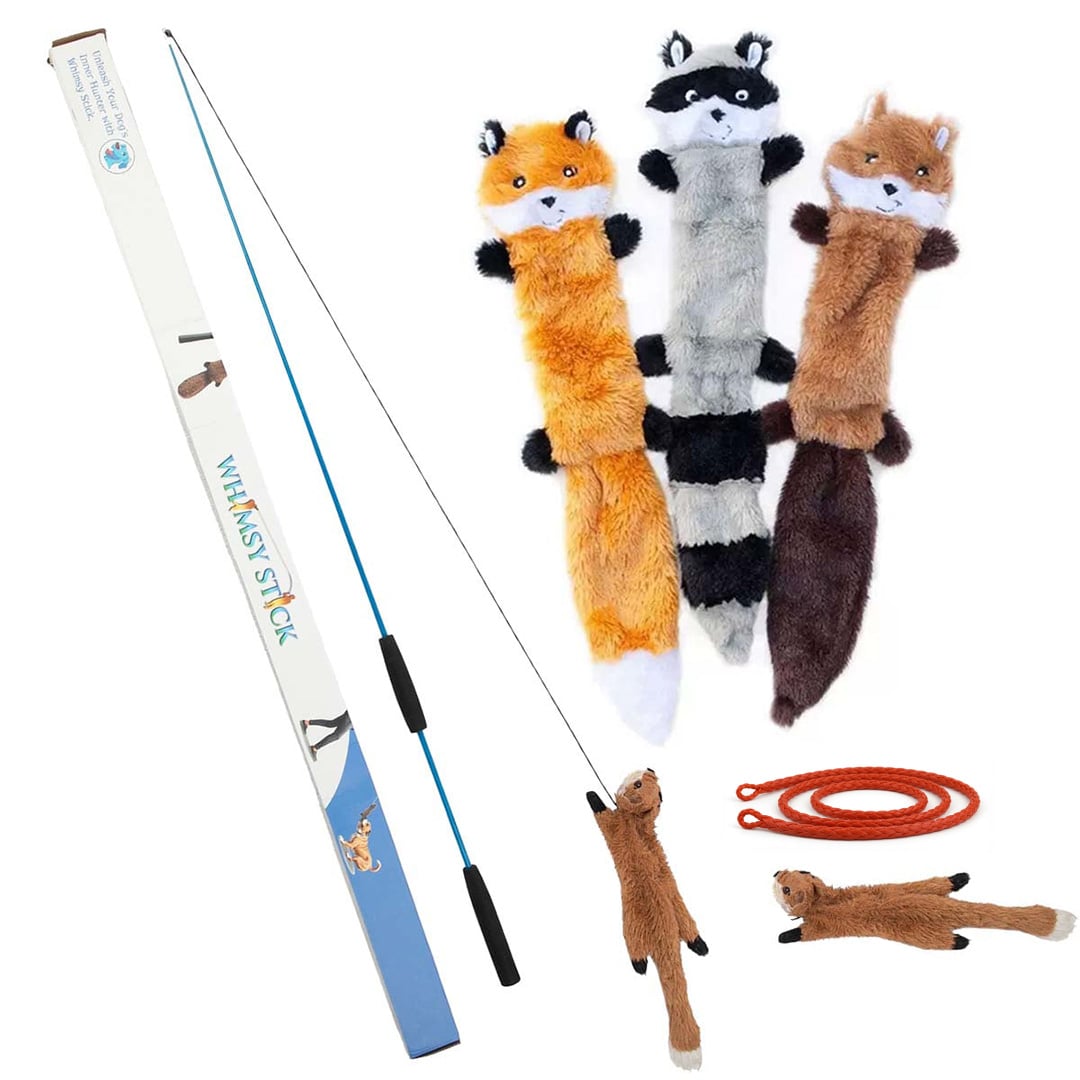
Whimsy Stick

Free Shipping $60+
·
30-Day Money-Back
·
Trainer-Designed
Training Guide · Reactive Dog Training

Reactive Dog Training: Fix the Root, Not the Reaction

Most dog reactivity advice targets the bark. This protocol targets the drive state behind it. Here is why counter-conditioning alone keeps failing your dog, and the instinct-based reactive dog training framework that actually changes the internal state.

Christopher Lee Moran, professional dog trainer and creator of the Whimsy Stick flirt pole
Christopher Lee MoranProfessional Dog Trainer · 10 Years · Instinctual Balance
12 min read · Updated April 2026
#1
Mistake: working too close to the trigger
3 to 4 wk
To see measurable threshold improvement
5 phases
In the full reactive dog training protocol
~400
Dogs trained with this method
TL;DR

Dog reactivity is a state problem, not a command problem. Your dog doesn’t have a sit-stay issue. They have an arousal regulation issue. Counter-conditioning helps at a distance but collapses the moment the trigger gets close because the underlying drive state was never addressed.

What actually works: drain the drive before exposure, build impulse control under real arousal, then layer in sub-threshold trigger work. In that order.

Most reactive dogs show measurable improvement in threshold and recovery speed within 3 to 4 weeks of this protocol applied daily. Your dog is not broken. They are under-fulfilled and over-threshold.

Who This Guide Is For

This guide is for owners of dogs that lunge, bark, spin, or shut down completely around other dogs, people, bikes, or fast-moving objects. It applies to dogs that have been through basic obedience but fall apart outside, dogs that are worse on leash than off, and dogs that have been through counter-conditioning programs that helped at a distance but never translated to real walks. If your dog can hold it together at home but loses the plot in the real world, the issue is arousal regulation and that is exactly what this protocol addresses.

Signs Your Dog Has a Reactivity Problem

Lunging or barking when another dog appears within 30 feet. Stiffening, staring, or locking on to triggers before the reaction fires. Refusing food or treats in stimulating environments. Unable to respond to known commands outside. Taking more than 2 to 3 minutes to settle after a trigger exposure. Getting progressively worse with more walks instead of better. Pulling hard toward or hard away from the same trigger depending on the moment. Any of these indicate the dog is regularly going over threshold and the threshold is not improving on its own.

What Dog Reactivity Actually Is (And Why This Matters)

Dog reactivity is not a training problem. It is a state problem. A reactive dog is not choosing to embarrass you at the corner of the block. They have crossed a neurological threshold where the thinking brain has gone offline and the arousal system has taken full control. Commands do not work in this state because the dog is not being disobedient. The dog literally cannot process language and respond to learned behaviors at the same time they are flooding.

This distinction determines everything about how reactive dog training is approached. If you believe reactivity is defiance, you correct the dog. If you understand that reactivity is a state collapse, you build a dog whose state doesn’t collapse. The second approach is the one that produces lasting change.

According to the American Kennel Club, reactive behavior in dogs is most accurately understood as an over-threshold response rather than willful disobedience. Similarly, research from Applied Animal Behaviour Science confirms that dogs exhibiting reactive behavior show measurable differences in arousal recovery time compared to non-reactive dogs, pointing to arousal regulation as the core variable, not obedience.

Key Takeaway

Your reactive dog is not bad. They are under-fulfilled and over-threshold. The drive that is currently exploding sideways at every dog on the block was supposed to go somewhere else. Reactive dog training works when you give it somewhere to go first, then build the regulation skills second.

Why Dog Reactivity Happens: The Three Root Causes

The Real Causes

Three things create dog reactivity. Most training programs address one.

Unfulfilled predatory drive with no structured outlet, so the drive redirects at whatever appears. Lack of impulse control under real arousal, meaning the dog has never practiced staying calm while flooded. And a history of rehearsed reactions, because every time the behavior fires, it gets stronger. Fix all three and you fix reactivity. Fix one and you get partial results that collapse under pressure.

Root Cause 1: Unfulfilled Drive

Dogs are wired to stalk, chase, capture, and win. That predatory motor pattern has a built-in neurological resolution point at the end. When the sequence completes, arousal drops, cortisol decreases, and the dog genuinely settles. When the sequence never completes because all the dog does is walk and fetch repetitively, the drive accumulates. It has nowhere to go. Then something triggers the chase response on a walk and the entire accumulated drive fires at once. That explosion is what dog reactivity looks like from the outside. The fix is not more exercise. The fix is completing the sequence deliberately through structured prey drive training. For dogs whose reactivity is specifically driven by high prey drive toward squirrels, bikes, or other fast-moving targets, the same instinct fulfillment framework covers the full approach.

Root Cause 2: No Impulse Control Under Arousal

Most dogs have been trained to sit and stay in a quiet living room. Almost none have been trained to regulate themselves while flooded with arousal. Reactive dog training fails when impulse control is only practiced at low arousal because the skill never transfers to the moments it actually matters. The specific skill reactive dogs are missing is sitting with intense arousal rather than immediately discharging it. Building that skill requires practicing it under drive, not under calm conditions. This is the part that impulse control drills under real arousal address directly.

Root Cause 3: Rehearsal History

Every time a reactive dog fires the full reaction, the neural pathway strengthens. The dog gets better at reacting with every repetition. This is why reactive dogs often get progressively worse over months of the same walk routine. The solution is stopping rehearsal immediately, before training starts, not after. Management is not a failure of training. It is the prerequisite for training to work at all.

Common approaches that stall

Why reactive dog training fails

  • Counter-conditioning at distance with no drive outlet
  • Repeating commands the dog cannot process over threshold
  • Flooding the dog by walking too close to triggers
  • More exercise that never completes the predatory sequence
  • Suppressing the reaction with corrections without changing the state
  • Ignoring the drive that is fueling the behavior in the first place
What this protocol does

Why instinct-based reactive dog training works

  • Drains drive before exposure so the dog enters with room to spare
  • Builds impulse control under real arousal before asking for it outside
  • Stops rehearsal through intelligent management, not avoidance
  • Completes the predatory sequence so baseline arousal drops
  • Changes the internal state, not just the surface behavior
  • Measures progress by recovery speed, not zero reactions

Phase One: Stop the Rehearsal Before Anything Else

Reactive dog training cannot begin until rehearsal stops. Every time your dog fires the full reactive sequence on a walk, the behavior strengthens. The dog is training themselves to be more reactive with every outing. This is not hypothetical. It is how behavioral patterns consolidate. If your dog has been reacting daily for six months, they have had hundreds of repetitions of practice. No training plan competes with that frequency of self-reinforcement.

Management means restructuring every walk and outing so the reactive response cannot fire. This is not permanent avoidance. It is creating the space where training can happen. Distance is the primary tool. Cross the street before threshold is reached, not after. Change your route, walk at less busy times, use parked cars and hedgerows as visual barriers. Increase distance until you find the point where your dog can notice a trigger without responding. That point is where training starts. Reactivity that co-occurs with leash pulling, barking on walks, or poor recall responds to the same management-first approach because the root arousal state driving all of those behaviors is the same.

The threshold mistake that keeps reactive dogs reactive

If your dog is barking, lunging, or unable to take food or respond to their name, you are already too close. The session is already a rehearsal. Step back until you find the distance where the dog is aware of the trigger but able to function. That is your working distance. Do not try to train your way through a threshold violation. Remove distance and reset.

Phase Two: Drain the Drive Before Every Outing

The single most underused tool in reactive dog training is pre-walk drive fulfillment. A dog that enters a stimulating environment with a full tank of accumulated predatory drive has almost no threshold space. A dog that enters with a depleted drive from a completed structured session has substantially more working room before reactivity fires. Understanding what type of exercise actually fulfills your dog’s drive cycle, rather than just burning calories, is the first step in getting this right. The high-energy dog guide breaks down why standard exercise routines fail high-drive dogs.

A structured flirt pole session run 15 to 30 minutes before every walk addresses this directly. The session must complete the full predatory motor pattern: stalk, chase, capture, possess, release, and end with a clean all-done into a settle cue. The settle cue is what closes the neurological loop and produces genuine post-session calm. Without it, the dog is still activated when the leash goes on. Follow the settle with a brief cognitive enrichment cooldown like a snuffle mat or scatter feed to bridge the transition from drive to genuine calm. For the exact session protocol, see Flirt Pole for Overexcited Dogs and the full Flirt Pole Training Guide.

I’ve had reactive dogs whose owners said they’d tried everything. The first thing I did was add a 7-minute structured session before every walk. Within two weeks, dogs that were exploding at 40 feet were managing at 20. Nothing else changed. The drive had somewhere to go before the walk started.

Christopher Lee Moran, Instinctual Balance Dog Training
Whimsy Stick Standard — reactive dogs under 30 lbs

Kevlar line, no snap-back, smooth controlled movement. Built for structured pre-walk drive fulfillment sessions that lower baseline arousal before your reactive dog hits the street. $54.95, free shipping, 30-day guarantee.

Shop Standard →
Whimsy Stick Rugged XL — reactive dogs over 30 lbs

Reinforced construction for larger reactive breeds. Same Kevlar line, same precision movement control. Built for the German Shepherds, Malinois, and high-drive dogs whose reactivity is powered by serious drive. Starting at $74.95, free shipping, 30-day guarantee.

Shop Rugged XL →

Phase Three: Build Impulse Control Under Real Arousal

Counter-conditioning builds a positive association with the trigger. That is useful but insufficient on its own because it does not build the skill of sitting with arousal. A reactive dog that has been through extensive counter-conditioning knows that other dogs sometimes predict chicken. That same dog still loses the plot when the distance closes because they have never practiced staying regulated at high arousal.

The mandatory wait cue before every flirt pole release is where this skill gets built. The dog is at high arousal, the lure is moving, drive is fully activated, and they are required to hold the wait for 5 to 10 seconds before releasing. That is the specific skill the reactive dog is missing on walks. It transfers because the neural mechanism is identical: sit with intense arousal rather than immediately discharging it. Build it under drive first. Then it is available in real-world contexts. For the full drill progression, see Impulse Control Drills.

Key Takeaway

Impulse control trained only at low arousal does not transfer to high-arousal real-world situations. The wait cue before each flirt pole release is the highest-value reactive dog training exercise available because it builds the specific skill, sitting with drive rather than discharging it, under the exact arousal level where reactive dogs fail.

Phase Four: The Reactive Dog Training Protocol

Once the dog has drive fulfillment sessions running daily and impulse control under arousal is building, introduce controlled trigger exposure with the following framework.

1
Run the drive fulfillment session first, always

Complete the full flirt pole session, all-done, and a 5-minute settle before the training walk begins. Never skip this step on a day when trigger exposure is planned. The dog entering the session with a full tank of drive has significantly less working room. The pre-session is not supplementary. It is load-bearing for everything that follows in reactive dog training.

15 to 30 min before walk
2
Find the dog’s current working distance, not the goal distance

Set up or locate a scenario where a known trigger will appear at a predictable distance. Identify the distance at which your reactive dog is aware of the trigger but able to take food, respond to their name, and maintain soft body language. That is your working distance for this session. It may feel humiliatingly far away. Work from there anyway. Reactive dog training that skips to a challenging distance is practice for reacting, not practice for staying regulated.

Sub-threshold only
3
Mark and reward orientation, disengagement, and check-ins

The moment your reactive dog notices the trigger and then voluntarily looks away, mark it and reward. Voluntary check-ins toward you while the trigger is present get marked and rewarded. Loose, soft body language while the trigger is visible gets marked and rewarded. You are reinforcing the internal state of regulation, not just the position of the dog. A dog that looks at a trigger and then looks back at you is practicing exactly the neurological pattern that makes reactive dog training stick long-term. The strength of those check-ins depends heavily on the handler bond. A dog that finds you genuinely interesting checks in because they want to, not because you have chicken.

Mark the state, not the trick
4
Remove distance and reset if threshold is reached

The moment the reactive dog stiffens, locks on, or shows early warning signals, calmly increase distance immediately. Do not wait for the full reaction. Do not repeat commands. Turn, walk, create space. Reset to sub-threshold and resume from there. Reaching threshold is not a failure of reactive dog training. It is information about where the current working distance needs to be. Respond to it as information, not as a setback.

Information, not failure
5
Track recovery speed as the real measure of progress

The goal of reactive dog training is not zero reactions. It is faster recovery. After a trigger exposure or even a mild reaction, how quickly does your dog return to a calm, responsive state? Recovery time in the first week might be 10 minutes. After 3 weeks of consistent work, it might be 90 seconds. That improvement in recovery speed is the most reliable indicator that the internal state is genuinely changing, not just that you found a distance far enough to keep the lid on. As recovery improves, working distance decreases naturally. Don’t chase the distance. Chase the recovery speed.

Recovery speed = real progress
From the Training Files

3-year-old German Shepherd, reactive to all dogs on leash for 18 months

The owners had done two rounds of group reactive dog training classes with marginal results. The dog could work at 60 feet but fell apart at 30. They were walking at 5 a.m. to avoid dogs. The counter-conditioning was working at distance but the dog had not improved over six months of consistent effort.

Week one: Added a daily 8-minute structured flirt pole session before every walk. No changes to the walk protocol. By the end of week one the dog was noticeably less locked-on at 60 feet. Week two: Introduced the wait cue before every flirt pole release, building impulse control under drive daily. Continued adding pre-walk sessions. Week three: Working distance had dropped from 60 feet to 35 feet without any change to the trigger exposure work. The dog’s recovery time after noticing a dog dropped from 8 minutes to under 2.

By week six, the dog was walking comfortably at 15 to 20 feet past unfamiliar dogs, recovering within 30 seconds of any trigger exposure. The owners went from 5 a.m. walks to normal evening walks. The counter-conditioning had been working. The drive fulfillment piece was what was missing.

The Mistakes That Keep Reactive Dogs Reactive

Mistake #1
Working too close, too soon

This is the most common and most damaging error in reactive dog training. A dog that is over threshold cannot learn. They are practicing reacting. Every session run at a distance where the dog is firing is making the reactivity stronger, not weaker. Distance feels like cheating. It is not. Distance is the training tool. Start humiliatingly far away and earn every foot toward the trigger through actual behavioral improvement.

Mistake #2
Repeating commands the dog cannot process

Saying “leave it, leave it, leave it, LEAVE IT” at a dog that is flooding accomplishes nothing except training the dog that “leave it” means nothing in high-arousal situations. If your dog cannot respond to their name, they cannot respond to a command. Remove distance and reset instead of escalating the command. The command is a check on the dog’s current state. If it doesn’t work, the state is the problem and more commands won’t solve it.

Mistake #3
Using exercise as the only intervention

More walks do not fix reactive dog reactivity. More fetch does not fix reactive dog reactivity. Aerobic exercise without neurological completion of the predatory sequence trains the arousal system to stay elevated. Dogs that run five miles a day can be highly reactive because cardiovascular fitness and arousal regulation are not the same thing. Structured drive fulfillment that completes the predatory sequence produces the post-session calm that aerobic exercise alone never provides. See why dogs are hyper after walks for a full breakdown of why this happens. The high-energy dog guide covers what actually works versus what just tires your dog out without resolving the drive.

Mistake #4
Punishing warning signals

Growling, stiffening, and hard staring are warning signals, not the problem. They are the dog communicating that they are uncomfortable and approaching threshold. Punishing the warning signal removes the communication without changing the underlying state. Dogs that have had their growl corrected away often go straight to snapping or lunging because the middle warning step has been trained out. In reactive dog training, warning signals are information to act on, not behaviors to suppress.

Mistake #5
Measuring progress by whether the dog reacted

Zero reactions is not the goal of reactive dog training. It is a byproduct of the actual goal, which is a dog whose threshold is high enough and whose recovery is fast enough that reactions are rare and brief. Measuring sessions by whether a reaction happened makes every threshold violation feel like failure and makes management feel like avoidance. Track recovery speed instead. A dog that recovers in 30 seconds is making dramatically more progress than a dog who goes 10 walks without a reaction by staying 80 feet from every dog.

Reading Your Dog’s Threshold: A Quick Reference

What you seeWhat it meansWhat to do
Loose body, able to take food, soft eyeWell under threshold. Prime learning zone.Mark and reward orientation and disengagement. Decrease distance slowly.
Ears forward, slight stiffening, still taking foodApproaching threshold. Dog is aware and alert.Hold distance. Increase rate of reinforcement. Do not move closer yet.
Hard stare, body tense, food refusal, slow to respond to nameAt threshold. Learning is impaired. Next step is the reaction.Increase distance immediately. Do not ask for commands. Reset.
Barking, lunging, spinning, unable to redirectOver threshold. Reactive sequence is firing. No learning happening.Remove distance urgently. Allow the dog to come down before attempting anything.
Shaking off, yawning, turning to sniff after the trigger passesSelf-calming signals. Dog is recovering.Let it happen. Do not rush. Recovery duration is your progress metric.

Breed Considerations in Reactive Dog Training

Reactive dog training applies across all breeds but the expression and the primary driver of reactivity vary. Herding breeds like Border Collies and Shelties are often reactive to movement, not threat. The predatory motor pattern is oriented toward controlling movement and fast-moving stimuli like bikes, joggers, and other dogs trigger that orientation drive rather than conflict drive. For herding breed reactive dog training specifics, see Flirt Pole for Herding Breeds.

High-drive working breeds like German Shepherds and Belgian Malinois are often reactive from accumulated frustration drive rather than fear. The leash prevents them from doing what their drive says to do and the frustration becomes the reaction. Pre-walk drive fulfillment is especially critical for this profile. See Flirt Pole Training for German Shepherds and Malinois for the breed-specific approach.

Fear-based reactivity, common in rescue dogs and undersocialized dogs of any breed, responds best to very gradual sub-threshold exposure combined with drive fulfillment and never to flooding or forced proximity. The reactive dog training protocol is the same but the distance management is more conservative and the timeline is longer. If the reactivity has a significant fear component and the dog has made contact or has a bite history, professional assessment before proceeding is the appropriate next step. When the reactivity coexists with other behavioral issues like separation anxiety, jumping, or nipping, addressing them together through the same structured drive outlet produces faster results than treating each issue separately.

Continue Reading

This reactive dog training protocol is one piece of a broader training system. These guides cover the specific tools and techniques referenced throughout this page.

Flirt Pole Training Guide covers the complete session structure. Flirt Pole for Reactive Dogs is the detailed step-by-step reactivity application. The best flirt pole for dogs breaks down why the tool matters as much as the method. And the flirt pole buying guide helps you choose the right size and build for your dog. For real owner results from dogs on this protocol, the reviews page has the full picture. Browse more training articles for additional breed-specific and behavioral guides.

Commonly Asked Questions

Reactive Dog Training: FAQ

What is the difference between dog reactivity and aggression?
Dog reactivity is an over-threshold response to a stimulus, typically driven by arousal, frustration, or fear. The dog is reacting to an internal state, not executing predatory intent. Aggression is goal-directed behavior aimed at influencing another animal or person through threat or contact. Many reactive dogs display zero aggression in other contexts. They are not trying to fight. They are dysregulated. The distinction matters because the training approach is fundamentally different. Reactive dog training addresses arousal regulation and impulse control. Aggression requires professional assessment first.
Because the training was only practiced at low arousal. A dog that knows sit at home in a quiet kitchen has learned sit under one specific set of conditions. The moment arousal spikes outdoors, the thinking brain has less access to learned behaviors and the reactive state takes over. The fix is not repeating the command louder. It is building impulse control and responsiveness under increasing levels of arousal, which is exactly what structured flirt pole training and sub-threshold trigger exposure accomplish. The skill needs to be practiced at the arousal level where it is needed, not just at the level where it is easy.
Yes, in two distinct ways. First, a structured pre-walk session drains drive and lowers baseline arousal, giving the reactive dog more threshold space before reactivity fires on the walk. Second, the mandatory wait and drop-it protocol builds impulse control specifically under high arousal, which is the skill the reactive dog is missing in real-world situations. The flirt pole does not fix reactivity by itself. It is one essential piece of the broader reactive dog training framework. For the full protocol, see Flirt Pole for Reactive Dogs.
Most dogs show measurable improvement in recovery speed within 3 to 4 weeks of daily consistent work combining drive fulfillment, impulse control sessions, and sub-threshold exposure. Full behavioral change where the dog reliably stays under threshold in previously impossible situations typically takes 2 to 4 months. Dogs with years of rehearsed reactivity take longer than dogs caught early. There is no honest shortcut to this timeline. Consistency beats intensity in reactive dog training every time.
Correcting the reactive outburst without addressing the underlying arousal and drive state rarely produces lasting change. You are interrupting the expression of an internal state without changing the state itself. Suppressing warning signals like growling can also remove communication that the dog uses before escalating to contact. Reactive dog training works by changing the dog’s internal state through drive fulfillment and building genuine impulse control, so the behavior doesn’t need to fire in the first place. Manage distance instead of correcting the reaction.
Other dogs are the most common trigger, followed by unfamiliar people, fast-moving objects like bikes and skateboards, runners, small animals, vehicles, and sudden sounds. Many reactive dogs have multiple triggers. The reactive dog training protocol is the same regardless of the specific trigger: manage exposure, drain drive beforehand, build impulse control under arousal, work sub-threshold with the specific trigger, and track recovery speed as the measure of progress.
Most reactive dogs are not dangerous in the aggression sense. They are dysregulated. The behavior looks alarming from the outside but is often driven by frustration or arousal rather than predatory or conflict-seeking intent. However, a dog in a full reactive state can redirect onto a handler, break equipment, or make situations unsafe through sheer force and unpredictability. If your dog has made contact or escalated to biting, a professional assessment before continuing reactive dog training at home is the correct next step.
A well-fitted harness or flat collar, a 4 to 6 foot leash for threshold management on walks, a long line for sub-threshold practice in open spaces, high-value food rewards, and a structured flirt pole for the drive fulfillment and impulse control portion of the protocol. Front-clip harnesses can reduce pulling leverage without adding aversive pressure. Avoid retractable leashes during reactive dog training as they remove the ability to create and hold distance instantly. For help choosing the right flirt pole for your dog, see the flirt pole buying guide.
Because the exercise is not completing the predatory sequence. Repetitive aerobic exercise like fetch or long walks activates the chase drive without providing neurological resolution through capture and possession. The result is a dog whose arousal system is trained to stay elevated, not come down. Structured flirt pole sessions that include catch, possession, drop-it, and a clean all-done sequence complete the sequence and produce genuine post-session calm. This is one of the most common reasons reactive dog training stalls. For a full breakdown, see Why Dogs Are Hyper After Walks.
Christopher Lee Moran, professional dog trainer
Christopher Lee Moran
Professional Dog Trainer · Founder, Instinctual Balance Dog Training

Christopher is the creator of the Controlled Freedom training philosophy and the Whimsy Stick flirt pole. He has spent 10 years specializing in drive-based behavioral modification with high-energy, reactive, and difficult-to-manage dogs. The reactive dog training framework in this guide is the same protocol applied across approximately 400 client dogs of all breeds and reactivity profiles.

This article is for educational purposes only and does not constitute veterinary or behavioral consultation. For severe reactivity, bite history, or escalating aggression, consult a qualified professional behaviorist before proceeding with any home training protocol.

Your dog’s drive needs somewhere to go before the walk starts.

Reactive dog training starts before the leash goes on

Standard for reactive dogs under 30 lbs. Rugged XL for larger breeds. Both built for the pre-walk drive fulfillment sessions that give your dog the threshold space to actually learn. Free shipping, 30-day money-back guarantee.

0
    0
    Your Cart
    Your cart is emptyReturn to Shop