
The Daily Dog Exercise Routine
A Finished Hunt.
A Finished Hunt.
What dog owners say.
Already know which one you need?
The chaos in your house runs on a schedule.
The walk isn’t doing it.
An hour of leash time and the dog comes home still wired, because walking exercises the legs while the hunting brain sits in the waiting room. Mileage was never the problem, though. The unfinished job is.
Zoomies keep office hours.
The 7pm laps, the 10pm parkour, the barking at nothing on a schedule you could set a watch by. Chaos that predictable is telling you something, since drive that never gets spent will always pick its own appointment time.
Rituals beat resolutions.
You won’t suddenly find an extra hour, but you will pour coffee tomorrow morning, and a hunt can ride along with it. The structured session in my flirt pole training guide takes ten minutes, start to finish.
Same time, same pole, same finished hunt.
Pour the coffee, grab the pole. Same slot every morning, because dogs learn schedules faster than commands. Within a week or two, yours will be waiting at the door before you are.
Run the sequence. Stalk, chase, capture, win, in an 8-foot circle of yard, garage, or hallway. You script the hunt with your wrist while the dog does all the sprinting.
Let the last catch stand. Your dog keeps the prize, parades it, and the hunt closes properly. A closed hunt is what buys the calm; an interrupted one just buys frustration.
Pole away, day begins. Water, a settle spot, and you drink your coffee while it’s still hot. Keep the regular walk too, though now it’s for sniffing and the world instead of a failed exhaustion attempt.
What ten minutes buys the other fourteen hours.
Dogs need daily physical and mental work, and the AKC’s exercise guidance is blunt about that. The trick isn’t more hours; it’s putting the right ten minutes in the same slot every day.
Coffee.
Kettle on, pole off the hook. Your dog is already at the door, because the ritual announces itself better than any alarm.
The hunt.
Ten minutes of stalk, chase, capture, win. Full sprints, hard cuts, and a brain working at redline while you stand in one spot.
The wind-down.
Last catch stands, prize gets paraded, pole goes away. Then it’s the water bowl, the settle spot, and a flop.
Actual peace.
Meetings, errands, couch time. The dog sleeps through all of it, not because they’re worn down, but because the day’s job is finished.
“He’s a working dog mix with energy to spare. Several 15-minute sessions a day with the Whimsy and it definitely takes his high-drive edge off.”
“Neagley loves it. Engaging, exciting, fast-paced play that wears her out. She gets so excited just to see us pull out the pole. Highly recommend for high energy play.”
Who the ritual fits, and who it doesn’t.
Start the hunt if…
- Your high-energy adult dog treats the morning walk like a warm-up
- You have ten minutes and an 8-foot circle of space, anywhere
- The evening zoomies are running your household calendar
- You want a routine the whole family can keep, rain or shine
- Your dog does better when the day has a predictable shape
Hold off if…
- Your dog is on vet-restricted activity, until you get the all-clear
- You have a young puppy, since growth plates need shorter, softer sessions
- You want a toy that entertains the dog without you in the room
- Nobody in the house will actually keep the ten-minute appointment
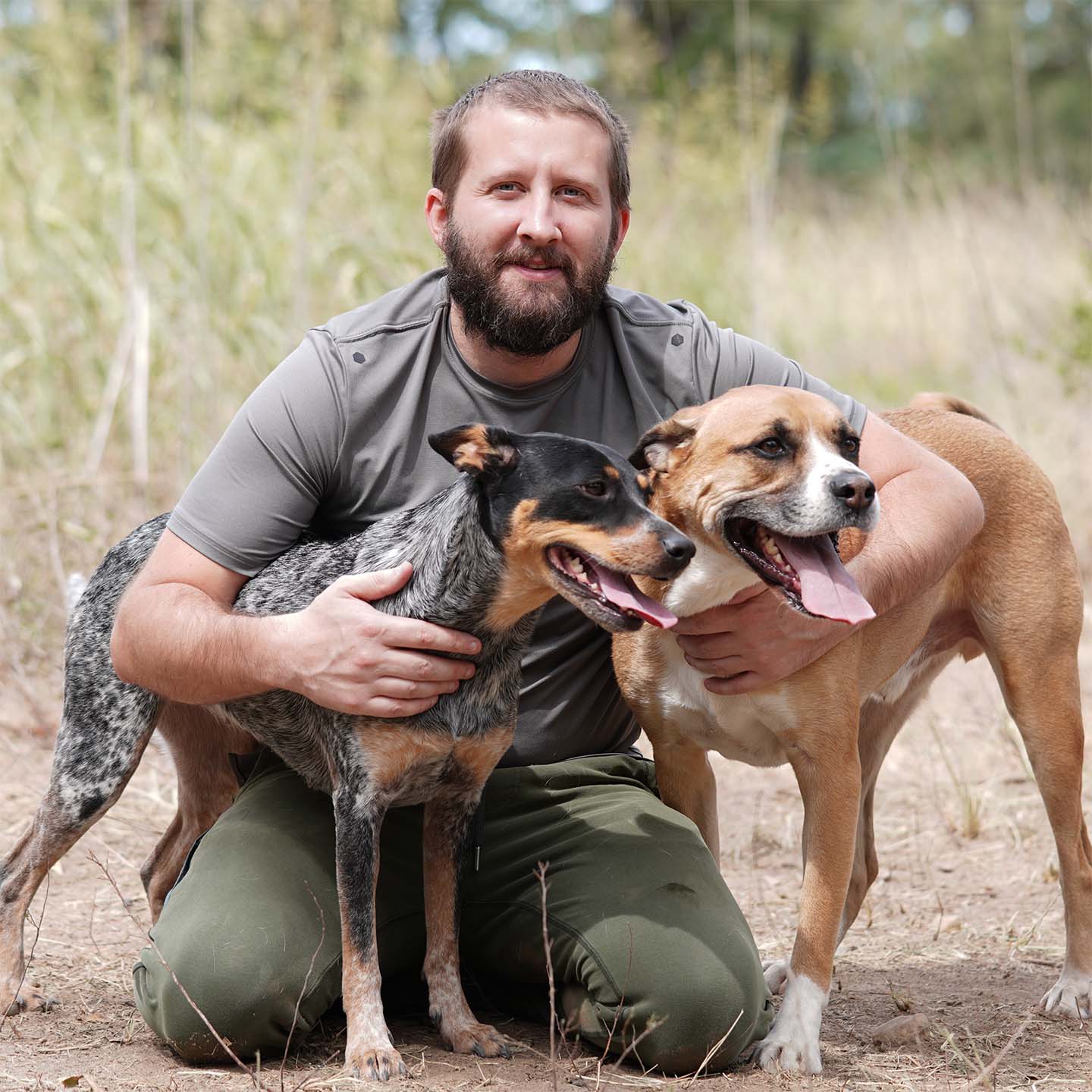
Every calm dog I know is on a schedule.
I’m Chris. Working dog trainer, ten years in, roughly 400 client dogs. No certifications, no veterinary credentials, just a decade of watching which households stay calm and which ones stay in crisis. The difference is rarely the dog; it’s whether the dog’s drive has a standing appointment.
Owners kept asking me for more exercise plans, but the plans that survive real life are the ones welded to a habit you already have. Coffee happens every morning no matter what, so I tell clients to hang the hunt on it. Ten minutes, then done, and the whole day downstream gets quieter.
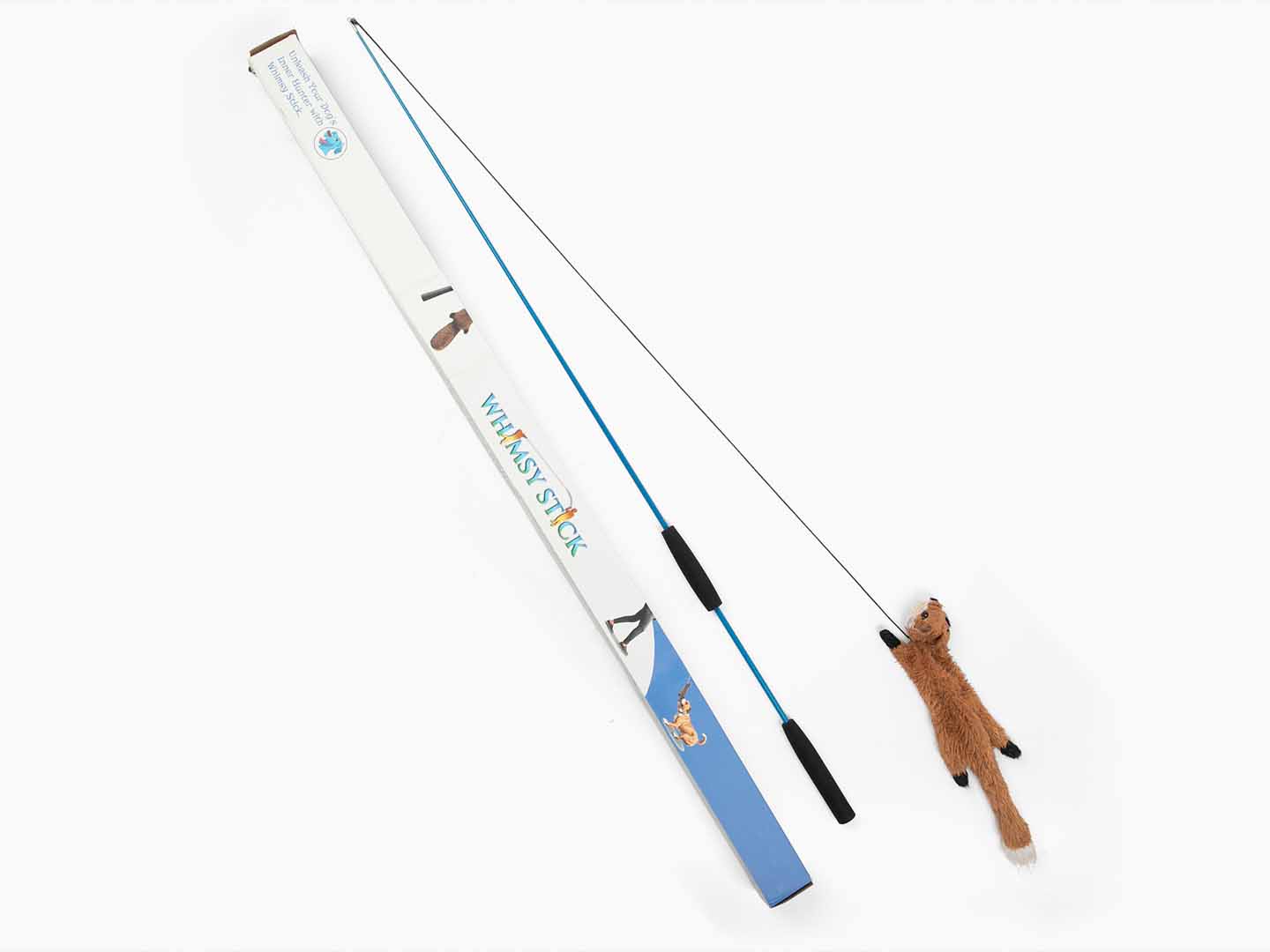
The poles on the market were junk when I started prescribing this, all telescoping joints and bungee snap-back, so I built the Whimsy Stick to survive daily use. Read the full story behind it here.
One pole. Every morning after this one.
Dogs 30 lbs and under take the Standard, while anything over 30 lbs or any power chewer takes the Rugged XL. Daily-ritual households burning through lures should also look at the Pro Kit.
- Lightweight springy fiberglass pole
- 1 prey lure, Unlucky the Squirrel
- 500-lb Kevlar braided cord, no bungee
- 30-day money-back guarantee
- One-piece heavy-duty fiberglass, no bungee
- 800-lb test Dyneema braided lure loop
- 3 prey lures: squirrel, fox, raccoon
- 30-day money-back guarantee
- Everything in the Rugged XL Bundle
- 5 prey lures for daily-session households
- Spare 800-lb Dyneema line included
- 30-day money-back guarantee
What you read here reflects my own experience training dogs. Not veterinary or behavioral medical advice. See the full exercise disclaimer →
30-Day Calmer Mornings or Your Money Back.
Run the ritual for 30 days first. If your mornings aren’t calmer and your dog isn’t more settled, email me directly for a full refund with free return shipping. No forms, no interrogation, no restocking fee. The habit either earns its slot next to your coffee or it goes back.
Real questions, straight answers.
What is a good daily exercise routine for a high energy dog?
One structured flirt pole session a day, ten minutes of stalk, chase, capture, win, plus a normal walk for sniffing and the world. The hunt does the exhausting while the walk does the exploring, and the AVMA’s walking guidance covers why the outing still matters.
Should I run the session in the morning or the evening?
Morning if you can, because the calm carries through the hours you most need it. Evening works too for dogs that build steam all day, or split the difference with a short session at each end. Consistency matters far more than the clock.
Does my dog need the hunt every day, or are rest days OK?
Most healthy adult dogs handle a daily session fine when you watch the intensity, and mine get one most days too. Seniors need slower drags with shorter sessions, puppies need growth-plate caution, and any dog on vet restriction waits for the all-clear before starting.
How long until the routine becomes a habit for my dog?
Most dogs anticipate the ritual within a week or two, and plenty figure it out faster. You’ll know it stuck when the dog is sitting by the pole hook before your alarm finishes. The settling improves on the same curve, since the day now has a predictable shape.
What if I miss a day?
Nothing breaks. Expect a little extra steam that evening, then run the session the next morning and the routine picks right back up. A habit measured in weeks survives a missed Tuesday; just don’t let one skipped day become a skipped month.
Can my kids run the daily session?
With supervision and a quick lesson in the rules, yes. An adult stays present, the kid keeps the lure at ground level, and every hunt still ends with the dog winning. Teasing without a catch is the one thing I don’t allow, from kids or adults.
What size Whimsy Stick should I get?
Standard for dogs 30 lbs and under, Rugged XL for dogs over 30 lbs and for power chewers of any size. Daily use is exactly what the Rugged XL’s one-piece fiberglass and 800-lb Dyneema loop were built to absorb.
More from the training desk.
The trainer’s playbook for dogs that never seem to find the off switch.
Why an hour of leash time can leave a dog more wound up, not less.
Honest numbers by age and breed type, without the one-size-fits-all fluff.
The coffee is already brewing. Add the hunt.
You’ll be standing in the kitchen tomorrow morning either way. Spend those ten minutes finishing a hunt, and the rest of the day belongs to both of you.


