
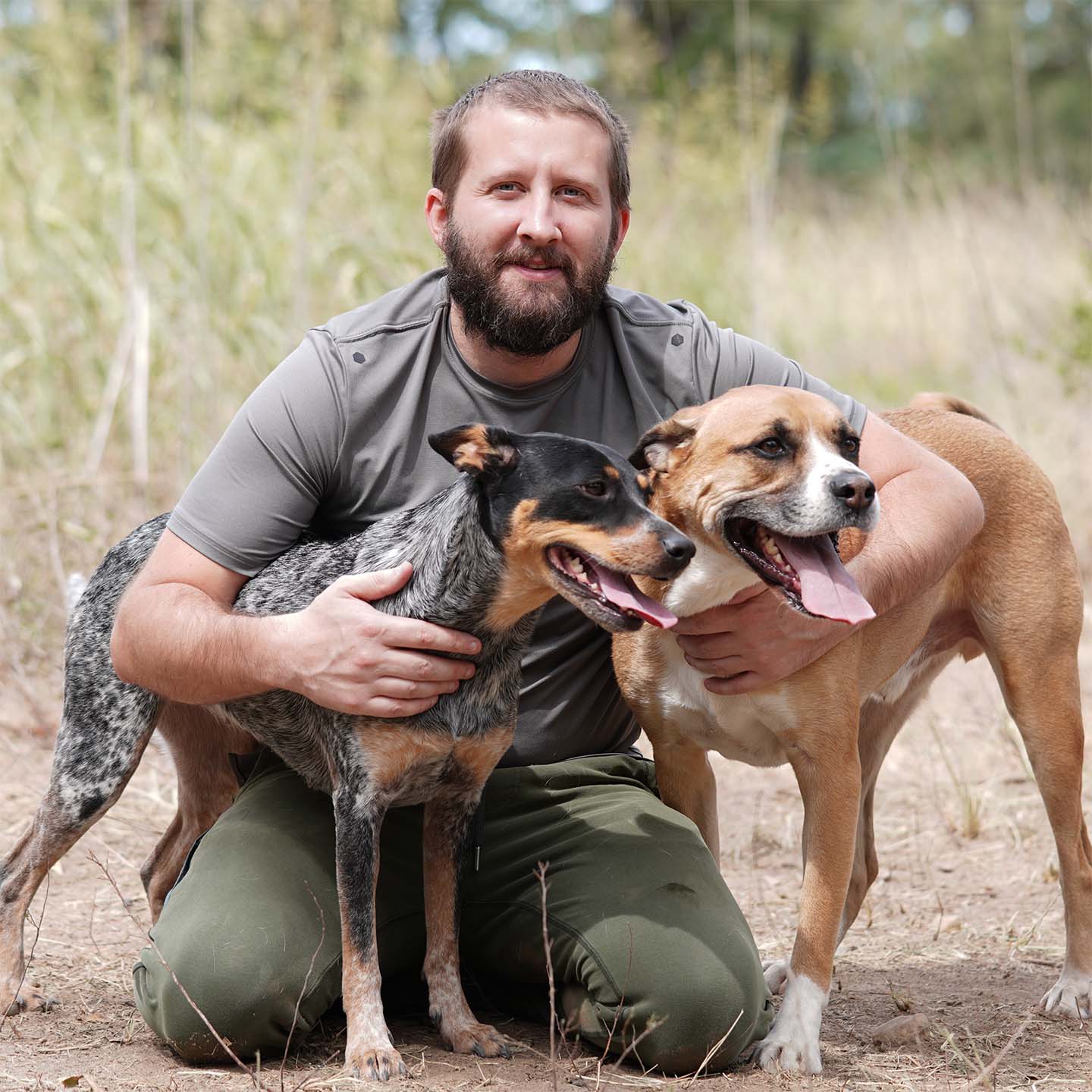
Walking doesn’t tire a high-energy dog because it’s low-intensity endurance exercise. It builds stamina rather than producing fatigue, and it doesn’t engage the prey drive system at all. What actually works: intensity plus mental tracking demand plus drive resolution. A 5 to 10 minute structured flirt pole session with sprint-and-cut movement, a wait before every release, and a drop-it after every catch produces more genuine tired than an hour of walking.
Two structured 7-minute daily sessions outperform an hour of endurance exercise. Expect measurable behavioral change in 2 to 3 weeks. The pillar framework is in the enrichment toys guide.
Who This Guide Is For
- Owners of dogs that are still wired after long walks
- Dogs that get more hyper with more exercise rather than less
- Dogs that destroy things despite being physically active
- People who’ve tried more walking, more fetch, and more dog park time without improvement
- Trainers looking for a structured exercise protocol for high-drive clients
Signs Your Dog Needs This Approach
- Still pacing and unable to settle after an hour-long walk
- Obsessively fixating on anything that moves: squirrels, bikes, joggers, blowing leaves
- Destructive chewing that doesn’t respond to chew toys or puzzle feeders
- Gets more wound up during fetch rather than more tired
- Stares at you or paces the house constantly looking for something to do
- Zoomies and nipping that escalate in the evenings regardless of daytime exercise
Why “More Exercise” Fails for High Energy Dogs
More walking doesn’t tire a high-energy dog because walking is endurance exercise, and endurance exercise builds stamina rather than producing fatigue. The standard advice for a high-energy dog is always the same: more exercise, another walk, longer fetch sessions, a dog park visit. For a lot of dogs, that works. But the owners searching for how to tire out a high-energy dog are specifically the ones for whom it doesn’t, because they’ve already tried the obvious answer and are still coming home to a dog who won’t settle.
The reason more of the same exercise fails is that high-drive dogs adapt. Steady-state low-intensity exercise builds cardiovascular fitness, which means the dog can sustain that level of exertion for longer without getting tired. Adding volume makes a more conditioned dog, not a more settled one. According to the American Kennel Club, intensity matters as much as duration for high-drive working breeds. Research from Cornell University’s College of Veterinary Medicine confirms that structured activity engaging the prey drive system produces behavioral resolution that endurance exercise alone cannot achieve.
If you want to know how to tire out a high energy dog, the answer isn’t more duration. It’s the right type of output. For a deeper explanation of the neurological system behind this, see prey drive training. For a complete breakdown of how much exercise different breeds and drive levels actually need, see the exercise guide.
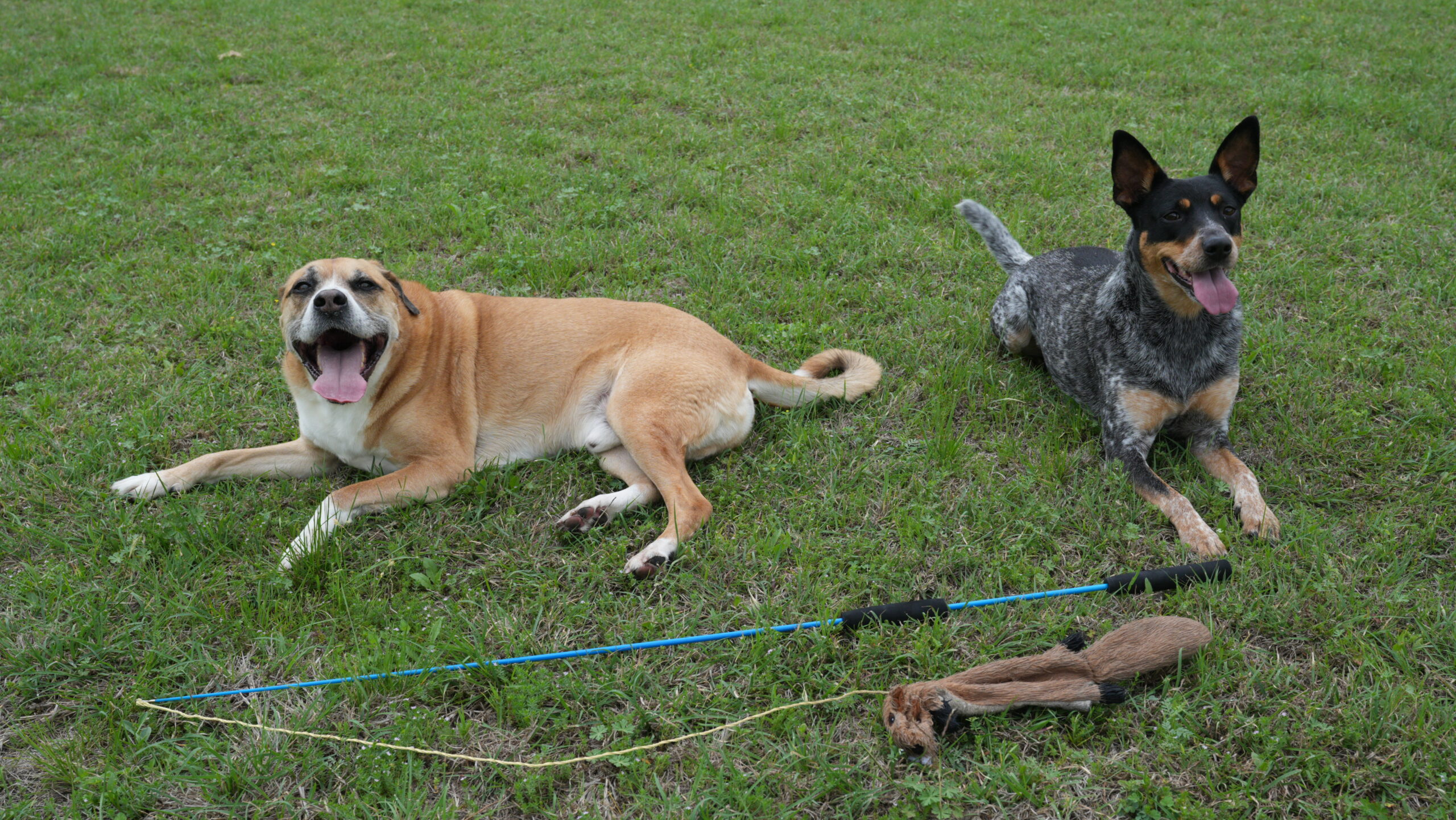
You are not trying to exhaust your dog. You are trying to resolve the drive. Exhaustion without resolution produces a physically spent dog who is still neurologically wired. Completing the predatory motor pattern with structure produces genuine calm. That’s the difference between volume and intensity.
When an owner tells me they’ve tried everything and the dog still won’t settle, the first thing I ask is whether they’re resolving the drive or just activating it more. More fetch, more running, more stimulation, that’s usually more activation. Resolution requires completing the sequence. That’s a completely different thing.
Christopher Lee Moran · Instinctual Balance Dog TrainingWhat the Right Toys Actually Do Differently
The best toys for hyperactive dogs share four characteristics that passive toys, fetch, and steady walking don’t. These four characteristics are what separates a tool that actually produces calm from one that keeps them occupied without resolving anything. Each one matters. For breed-level applications and tool selection, see the best flirt pole for high energy dogs.
Handler control over intensity
The handler moves the lure, not the dog. Most important element. You manage the intensity level rather than letting the dog run unchecked. You can escalate for a dog that needs high intensity, dial back for one getting too wound up, and end cleanly with an all-done cue rather than stopping mid-drive.
EssentialSprint-and-cut movement
Direction changes, pauses, and acceleration bursts force the dog to track, predict, and adjust in real time. The cognitive load is significant. The mental effort of tracking an unpredictable target depletes energy as much as the physical running. High-intensity interval exercise that produces genuine fatigue in a fraction of the time steady-state walking does.
EssentialBuilt-in behavioral cues
Wait before every release. Drop-it after every catch. For a high energy dog, that wait cue is where the impulse control training happens, adding neurological fatigue on top of the physical. These cues aren’t extra training steps. They’re structural requirements that make the dog engage cognitively. See the overexcited dogs protocol for the full impulse control framework.
Makes it training tooDeliberate session close
A clear all-done ending followed by a settle or place cue. Sessions that end mid-drive leave the arousal system still running. Without it, the arousal carries forward instead of resolving. The deliberate ending is what converts fatigue into the settled state owners are trying to reach.
Where calm comes fromThe 5-Step Session That Tires Real High Drive
This is the five-step routine that answers how to tire out a high energy dog properly. Keep sessions to 5 to 10 minutes. Short and structured beats long and chaotic every time. The full method is in the flirt pole session structure.
Drive-Resolved 5-Step Session
Dog in a sit or down, lure motionless on the ground. Wait Hold 5 to 15 seconds and vary the duration. The anticipation moment before release is often more activating than the chase itself, and it’s the first cognitive demand of the session.
Move the lure with direction changes, pauses, and bursts. Get it Keep it low and wide. Ground movement forces the sprint-and-cut pattern that produces real physical fatigue. Tight circles or aerial movement produce jumping, not sprinting.
Stop the lure and let the dog have it. Three to five seconds of actual possession before the drop-it cue. This is where the neurological sequence completes. Skipping possession is the single most common reason sessions don’t produce calm afterward.
Go neutral and still. Out Mark the release and restart from position. Restarting is the reward for releasing. Builds a fast reliable out without the dog viewing it as the end of the game.
Verbal all-done, lure away, then a down or place cue with calm reward. All done Not optional. The deliberate ending is what teaches the dog that the sequence completing means rest, and what converts the post-session fatigue into the settled behavior you’re after.
3-year-old German Shepherd, 90 minutes of daily walking, still unable to settle
The owner was walking this dog 90 minutes a day across two walks, plus 20 minutes of fetch in the backyard. The dog was still pacing the house, destroying furniture, and unable to lie down for more than a few minutes. The owner was exhausted and considering medication.
We replaced the morning fetch with a 7-minute structured flirt pole session using the 5-step protocol above, added a second 7-minute evening session before dinner, and reduced the walks to one 30-minute decompression sniff walk. Total daily exercise time dropped from 110 minutes to 44 minutes.
The Daily Routine That Actually Works
The secret to how to tire out a high energy dog long-term is consistency. Two short daily sessions outperform one long session three times a week because they give drive a daily outlet rather than letting it accumulate. This is the template.
Drive-resolved play before feeding. Sets the dog’s behavioral tone for the day. Starting before breakfast means the dog’s motivation is highest and the session has real stakes.
Drive-resolved anchorWith post-session arousal lower, the walk becomes genuine decompression rather than another activation event. Let the dog lead the pace and sniff extensively. Olfactory processing is cognitively tiring. For dogs typically hyper after walks, this sequence reversal is often the fix on its own.
DecompressionCognitive enrichment works well here because arousal is lower. This is where puzzle feeders and Kongs produce the calm they’re supposed to, after drive has been resolved, not instead of it.
Cognitive cooldownThe evening session prevents the 8pm zoomies and the inability-to-settle behavior most owners describe as their biggest frustration. Resolves the drive that built up during the day. Two structured sessions daily, morning and evening, changes the baseline over time, not just the moment.
Drive-resolved anchorWeek 1: post-session calm may only last 30 to 60 minutes. Fewer zoomies. Week 2: settle period extends. Dog begins offering calm behavior more readily. Wait cue becomes faster. Week 3: baseline arousal is visibly lower throughout the day. Carry-over into walks and household behavior is noticeable. Destructive behavior typically drops significantly or stops entirely.
Standard vs. Rugged XL
Once you understand how to tire out a high energy dog, the next question is which tool matches your dog’s size and drive level. The Standard handles dogs under 30 lbs. The Rugged XL is built for dogs over 30 lbs and high-drive working breeds. The construction is rated for the forces these dogs generate at full sprint speed. For a detailed side-by-side comparison and full spec breakdown, see the buying guide.
Kevlar line, replaceable fleece lures. The daily tool that produces real tired in 7 to 10 minutes instead of an hour of endurance exercise.
Reinforced for working breeds and power dogs. 8-ft radius, multiple lures. Built for the dogs that have always been impossible to tire out.