
TL;DR
You can fully exercise a dog without leaving the house or yard, and for high-drive dogs it often works better than walking. The 12 methods below are ranked by neurological effectiveness. Structured chase (flirt pole) ranks first because it completes the predatory sequence walking never satisfies. The 15-minute trainer routine beats most 60-minute walks. Scent work, puzzle feeders, and training games cover the mental side.
Particularly if you have a high-drive dog, an injury that keeps you home, weather that makes walking miserable, or an apartment that limits outdoor access, this is the page you needed.
Who This Is For
- Owners physically unable to walk their dog (injury, surgery, illness, mobility issues)
- Owners whose dog is recovering from surgery or has temporary medical restrictions on walking
- People stuck inside due to extreme weather (winter cold, summer heat, storms, smoke)
- Apartment dwellers without easy outdoor access
- Owners of high-drive breeds whose dog is still wired after long walks and needs more
- Owners who want to supplement walks with methods that produce deeper neurological fatigue
- Anyone who feels guilty about not walking their dog enough and wants real alternatives
Signs Your Dog Needs This
- Still bouncing off the walls 30 minutes after a long walk
- Destroying furniture, digging, or chewing things they know are off-limits
- Barking or whining with no obvious trigger at home
- Obsessively following you from room to room looking for something to do
- Getting worse on leash despite more frequent walks
- Pacing, spinning, or showing stereotypic behavior indoors
- Pulling so hard on walks that walking them has become miserable
Why Walks Are Not Always Enough
Generally, walks are not the gold standard most dog owners think they are. They are a low-intensity rhythmic activity that produces mild physical tiredness, some mental stimulation from environmental scents, and social benefit from the leash time with you. For an average low-drive dog, that combination is fine. For everyone else, walks fall short in three specific ways the alternatives below address directly.
The predatory sequence never closes on a walk. Dogs evolved a specific neurological pattern (orient, eye-stalk, chase, grab-bite, kill-bite) that produces deep satisfaction when expressed. Walking activates none of it. A dog who walks for an hour has moved their body but their brain is still mid-loop on the prey sequence the walk never let them close. This is why high-drive breeds remain wired after even long walks. The chase has never happened. It is also why your dog is still hyper after walks, despite all the exercise.
Sniffing and breed drive: why walks miss the mark
Sniffing on a walk is passive, not tiring. It produces some cognitive engagement, but the dog is not problem-solving. Real mental fatigue comes from active problem-solving: puzzle feeders, scent work where the dog has to figure out a search pattern, training games that force decisions. Ten minutes of that kind of active work produces more mental tiredness than 60 minutes of passive sniffing on a leash.
Particularly, walks scale poorly for high-drive breeds. A Husky bred to pull sleds 100 miles a day is not going to be satisfied by 60 minutes around the block. A Border Collie bred to herd sheep all day is not going to be satisfied by a leashed stroll. Per AKC’s guidance on hyperactive dogs, for high-drive breeds, walking alone is rarely sufficient. What actually works is covered in how to tire out a high-energy dog.
The owner who skips walks and replaces them with structured indoor work often ends up with a more satisfied dog than the owner who walks for two hours a day without ever letting the dog finish what their brain evolved to do.
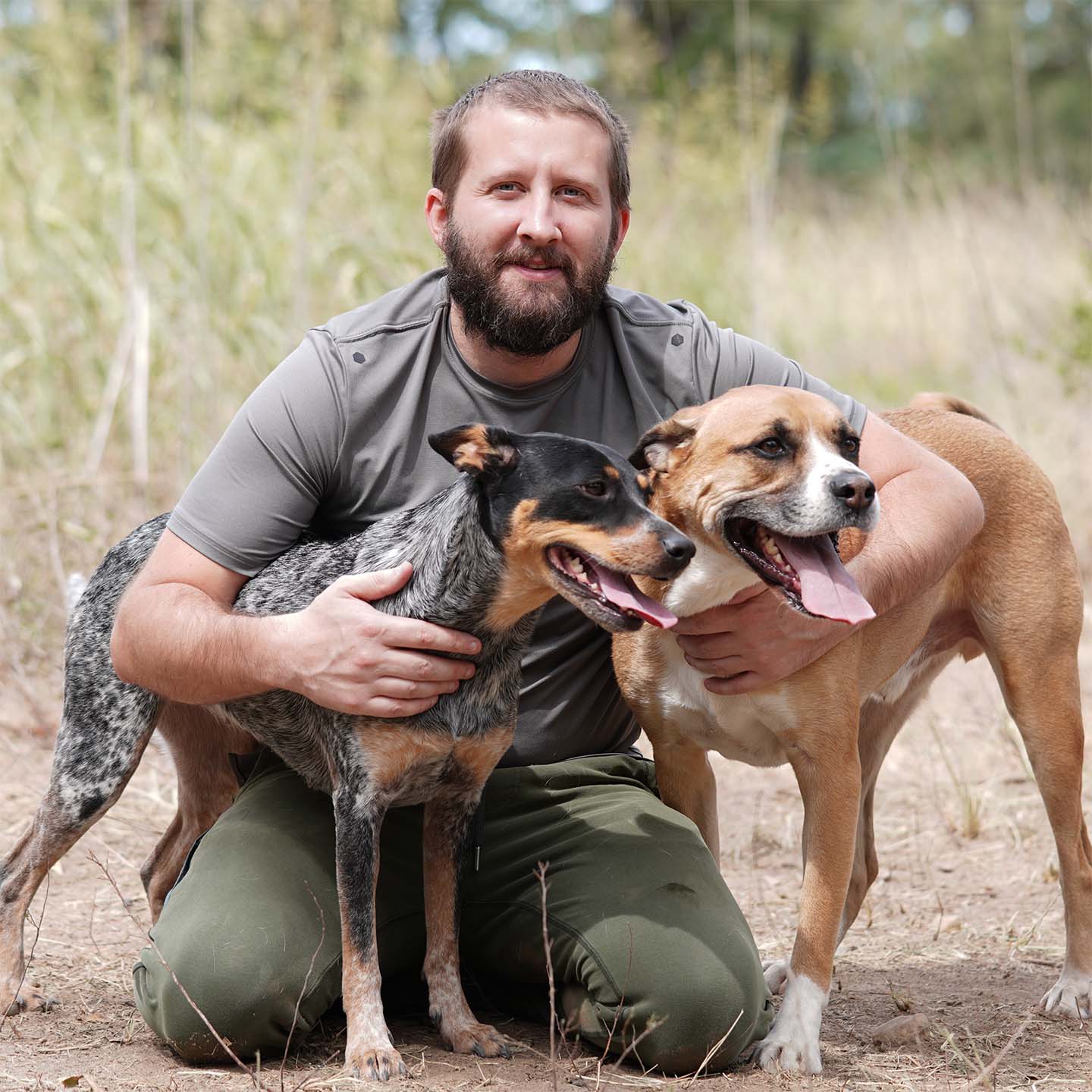
Christopher Lee Moran · Working Dog Trainer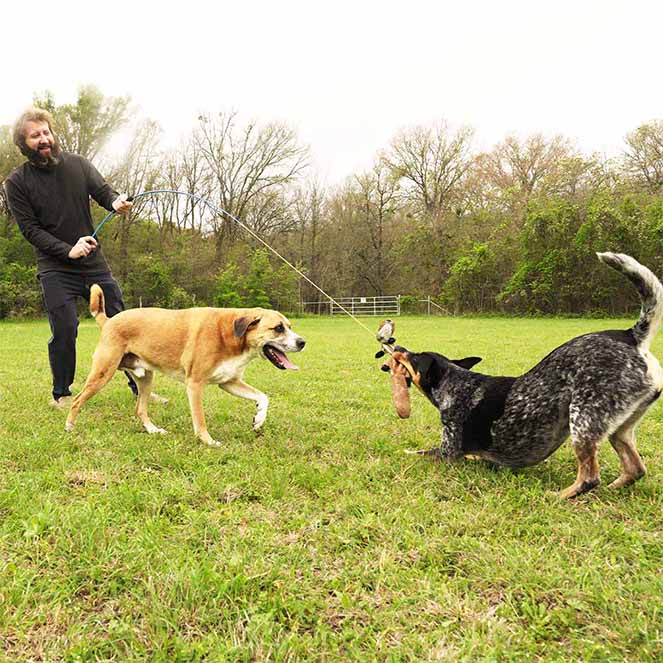
The 12 Methods, Ranked Honestly
Specifically, below is every method I have used with client dogs, scored on physical fatigue per minute, mental fatigue per minute, and equipment needed. Most listicles randomize the order or pad with weak methods. In fact, this list is ranked. Particularly, the top 4 do most of the work. Everything below #6 is supplementary.
Indeed, this completes the full predatory sequence walking never satisfies. Ten minutes of structured chase produces deeper fatigue than a 60-minute walk for most dogs.
All-out sprints between two recall points. Drills obedience while burning physical energy, no gear, no yard, treats only.
Meanwhile, progressively hidden food and target scents. Active problem-solving produces more mental fatigue than an hour of casual sniffing on a walk.
These three cover the full picture: predatory satisfaction, raw sprints, and mental load. Stack any two in a single session and you out-tire a 60-minute walk every time.
Structured Flirt Pole Work
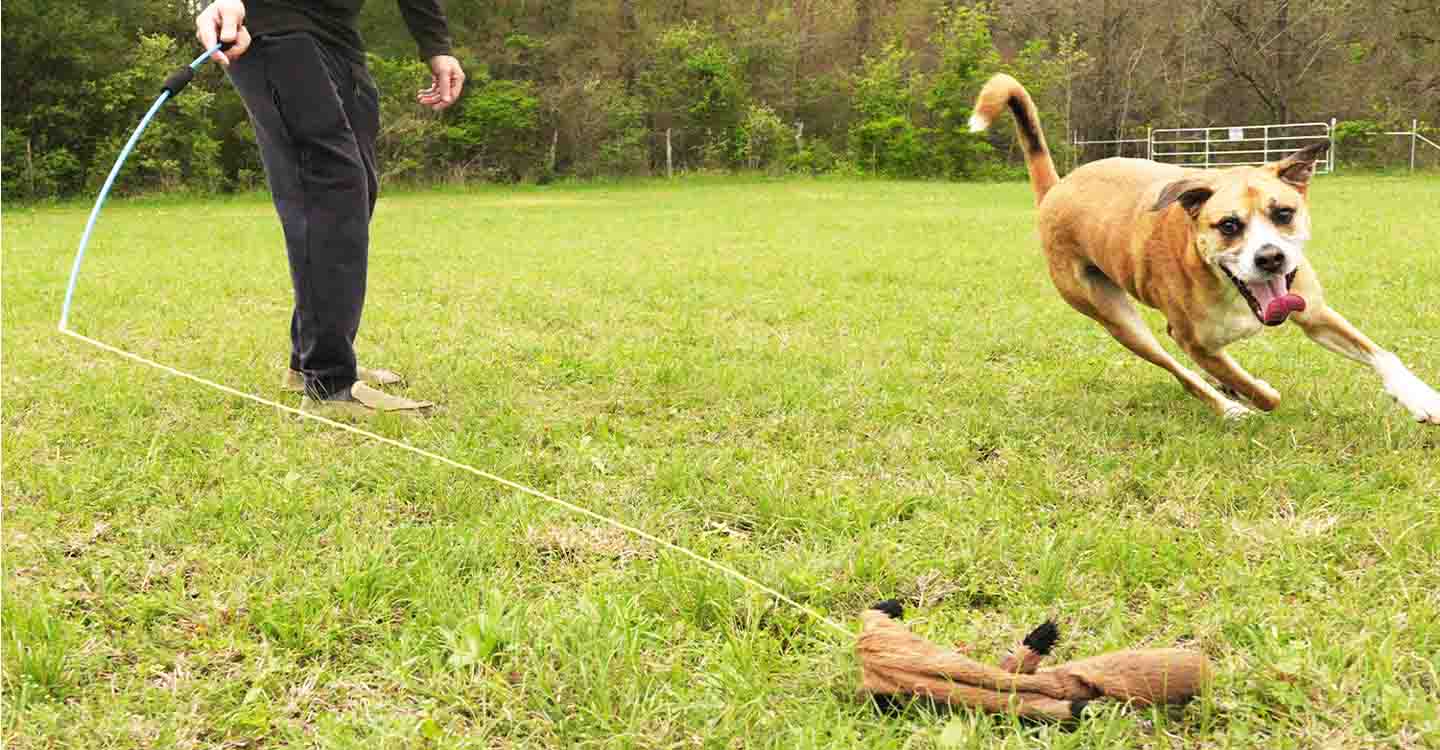
A flirt pole is a long handle with a line and lure that lets your dog chase, capture, and complete the full predatory sequence in a small space. It is the most efficient single tool for tiring a dog out without walking because it completes the neurological pattern that walking does not. For the full professional reference, see the canine flirt pole.
Generally, a 10-minute flirt pole session produces equivalent or deeper fatigue than a 60-minute walk for most dogs. The dog runs, cuts, captures, releases, and resets, repeatedly, in a 30-foot working radius. Works in a backyard, courtyard, parking lot during off-hours, or any quiet outdoor space. For the technique, see the flirt pole training guide.
Hallway Recall Sprints
Two people stationed at opposite ends of a hallway or large room. Each calls the dog by name, then rewards heavily with a treat or quick tug game when the dog arrives. The dog turns around and sprints back to the other person. Repeat for 5 to 10 minutes. This drills recall behavior while producing substantial physical fatigue from the repeated all-out sprints.
Solo version: throw a treat to one end of the hallway, send the dog to get it, then call them back to you. The throw-and-recall pattern produces equivalent movement to fetch but adds the recall component that builds obedience while exercising.
Scent Work and Nose Games
Hide treats in progressively harder spots around your home or yard. Start visible, then partially hidden, then fully hidden in cushions, under towels, behind furniture, on shelves. The dog uses their nose to systematically search. 10 minutes of real scent work produces more mental fatigue than an hour of walking because the dog is actively problem-solving, not passively sniffing.
Advanced version: teach the dog to search for a specific scent (a specific toy, a specific treat) and reward only when they find the right one. This is the foundation of professional scent detection work and it scales infinitely as the dog gets better.
Puzzle Feeders and Meal Enrichment
Replace the food bowl with puzzle feeders, slow feeders, snuffle mats, frozen Kongs, or scatter-fed meals. The dog works for their food instead of inhaling it in 30 seconds. A 15-minute puzzle session at every meal turns daily feeding into substantial cognitive work without you having to actively participate.
This is the highest-leverage method on the list because it costs you no active time. Set it up, hand it over, the dog gets fed and mentally exercised simultaneously. See enrichment toys and mental stimulation for the full breakdown.
Impulse Control Drills
Wait cues, place training, leave-it, and structured release work. These produce mental fatigue through self-regulation rather than physical movement, but the cumulative effect on a dog’s nervous system is substantial. 10 minutes of structured impulse control work tires most dogs out as much as 30 minutes of casual play.
Additionally, impulse control work produces behavior change that lasts beyond the session. A dog who has been drilled on wait cues is calmer at the door, around food, around guests, and on the rare walks you do take.
Tug Work With Rules
Structured tug is among the most effective bonding and energy-burning activities available, despite the old myth that tug makes dogs aggressive. The key word is structured: clear start cue, clear release cue, dog drops on command. Played correctly, tug builds drive engagement, impulse control, and burns substantial physical energy in short sessions.
5 minutes of intense structured tug produces equivalent fatigue to 15 minutes of fetch. Use a real tug toy, not an old sock. Let the dog win sometimes. End the session on your terms, not theirs.
Stair Sprints
In practice, if you have stairs you have a cardio gym. Throw a treat or toy up the stairs, send the dog to retrieve it, let them come back down. Repeat 10 to 20 times. The vertical component recruits muscle groups walking does not and produces fast fatigue. Not for puppies (joint development), not for senior dogs with orthopedic history (impact), and not for breeds with back issues like Dachshunds and Corgis.
For healthy adult dogs over 12 months, stair work is genuinely effective. 10 minutes produces strong physical tiredness. Puppies under 12 months should skip this method entirely, growth plates are still open and high-impact stair repetitions cause joint damage.
Indoor Fetch
Soft toy, long hallway or large room, throw and retrieve. Works for many dogs but I rank it lower than methods that complete the predatory sequence because fetch builds ball obsession in some dogs and produces high arousal without resolution. For dogs without obsessive tendencies, indoor fetch is fine. For high-drive dogs, structured chase work is the better choice.
Instead, add intentional structure: dog sits, you throw, release cue, retrieve, drop cue, repeat. The structure converts fetch from mindless retrieving to controlled drive work.
New Trick Training
Teaching a new trick or behavior produces serious mental fatigue. Spin, roll over, weave through legs, paw targeting, settle on a mat, complex chain behaviors. The cognitive load of learning a novel pattern is genuinely tiring for dogs, and the side benefit is a dog with a bigger trained repertoire. 10 minutes is the typical session limit before fatigue hurts learning.
Best paired with another method: 10 minutes of training, then 8 to 12 minutes of physical chase work. The mental and physical sides reinforce each other.
Dog Treadmill
Specifically, dog-specific treadmills exist and they work for some dogs. The introduction takes weeks to do correctly. Start with the dog standing on a stationary belt, treats only, no pressure. Gradually introduce slow motion. Never tie the dog to the treadmill. Never force the speed.
I rank it middle of the pack because the equipment is expensive ($500 to $2000), the introduction is slow, and many dogs never genuinely take to it. For owners with mobility issues, the investment can pay off long-term. For everyone else, the methods above are easier.
Kiddie Pool Water Work
For example, $15 kiddie pool, backyard, summer weather. Many dogs find water genuinely enriching and the resistance of moving through water provides low-impact conditioning. Drop floating toys, hide treats around the pool, or just let them splash. Not all dogs love water, so this is dog-specific.
For dogs with orthopedic issues or recovering from surgery, water work is one of the safest forms of exercise available. Per AVMA pet-care guidance, low-impact options like water are particularly valuable for senior dogs and dogs in recovery.
Hide and Seek With You
You hide somewhere in the house. The dog finds you. Reward heavily when they do. Repeat. This is more of a bonding activity than a serious exercise method, but it produces real mental fatigue from the search component and serves a secondary function of strengthening recall behavior. Combine with the bonding work.
Overall, best as a supplement and not a primary method. 10 minutes pairs well with a more intensive method earlier in the day.
The 15-Minute Indoor Routine That Beats a 60-Minute Walk
Here is the structured combination that produces equivalent or better tiredness than a full walk in just 15 minutes:
3 + 8 + 4 = One Tired Dog
Warm-Up Obedience
Place training, sit-stays, or basic obedience drills. Lowers arousal and engages focus before higher-intensity work.
Structured Chase
First, flirt pole work in the yard, or indoor chase variations. Catches every 30 to 45 seconds. The dog completes the predatory sequence repeatedly.
Cooldown Scent Work
Finally, hidden treats around the room, puzzle feeder, or scatter feeding. Brings arousal back down and finishes on mental stimulation.
This is the routine I gave hundreds of clients whose dogs were under-exercised by walks alone. It is the core of what I call the Controlled Freedom method: give the dog a structured outlet for the drives they were bred with, and the rest of their behavior stabilizes around it. The structure works because it hits three different neurological systems in sequence: obedience activates the executive function, structured chase satisfies the predatory sequence, and scent work engages the olfactory system that walking does not adequately stimulate.
15 minutes of structured combined work beats 60 minutes of walking for most adult dogs. The key word is structured. Random play or random sniffing does not produce the same fatigue as deliberate, sequenced work.
Mental and Physical Fatigue Are Not the Same Thing
A widely underappreciated fact in dog training: mental fatigue often tires a dog more thoroughly than physical fatigue. A dog who runs for an hour but never thinks is bouncing off the walls 30 minutes later. A dog who spent 15 minutes problem-solving a complex puzzle feeder is asleep on the couch.
The methods on this list split into two camps. Methods 1, 2, 7, 8, 10, 11 are primarily physical. Methods 3, 4, 5, 9, 12 are primarily mental. The best sessions combine both. The 15-minute routine above is structured specifically to hit both layers in sequence, which is why it outperforms single-modality exercise.
For high-drive dogs with reactivity or impulse control issues, the mental layer is often more important than the physical layer. The combined protocol in the routine works because it satisfies both nervous-system loops in one session.
A tired body with a wired brain still gives you a wired dog. Mental fatigue is the variable most owners miss, and it is the one that actually settles behavior at home.
| Method | Physical Fatigue | Mental Fatigue | Predatory Seq. | Equipment Cost |
|---|---|---|---|---|
| Flirt pole (structured chase) | High | High | Yes | $55–$95 |
| 60-minute walk | Medium | Low | No | $0 |
| Hallway recall sprints | High | Medium | No | $0 |
| Scent work / nose games | Low | High | No | $0 |
| Puzzle feeders | None | High | No | $10–$40 |
| Structured tug | Medium | Medium | No | $10–$20 |
| 15-min trainer routine (combined) | High | High | Yes | $55–$95 |
When Walking Is Genuinely Necessary
I am not anti-walking; instead, I am anti-walks-as-the-only-tool. Walks provide legitimate benefits that no indoor method fully replaces:
First, puppy socialization (8 to 16 weeks). Puppies in their socialization window need exposure to varied environments, novel smells, different people, traffic sounds, and other dogs in safe contexts. No indoor activity replicates this. If your puppy is in this window, prioritize walks even if they are short.
Environmental enrichment for adult dogs. Even fully indoor-exercised adult dogs benefit from occasional walks to maintain comfort with the outside world. Once a week or every few days is usually sufficient if your indoor program is structured well.
Social interaction with other dogs. If your dog has appropriate social skills and enjoys meeting other dogs, walks are an irreplaceable social opportunity. (If your dog is reactive or anti-social, skipping walks is often the better welfare choice.)
Bathroom needs. Backyards solve most of this. Apartment dogs without yards genuinely need walks for elimination, separately from the exercise question.
For everything else, the indoor methods above are not a compromise. They are often the better tool, especially for the high-drive dog populations that walks fail.
Special Situations: Specific Cases, Specific Methods
Recovering from Surgery or Injury (Yours or the Dog’s)
Low-impact mental methods only: puzzle feeders, scent work, scatter feeding, training a new behavior from a seated position. Skip stairs, flirt pole, treadmill, tug, hallway sprints. The goal is to maintain mental engagement and a baseline of cognitive stimulation while the body heals. For the dog’s recovery, follow your vet’s specific restrictions. For your own injury, supervise from a chair if you have someone to run more active sessions.
Extreme Weather (Heat, Cold, Storms, Smoke)
Indoor methods exclusively. The 15-minute routine above works without modification. Heat is the most dangerous: when sustained outdoor temperatures exceed 85F, skip outdoor flirt pole work entirely and move everything indoors. Cold is mostly tolerable for cold-weather breeds but punishing for thin-coated dogs; if you would not want to be outside in shorts, your Greyhound probably feels the same way.
Apartment Living Without a Yard
Methods 2, 3, 4, 5, 6, 8, 9, 12 all work in apartment spaces. For chase work specifically, hallway recall sprints (method 2) replace the flirt pole if you have no outdoor space. For more on apartment-specific protocols, see apartment dog exercise for the full breakdown.
Senior Dogs With Joint Issues
Low-impact methods only: scent work, puzzle feeders, gentle hide-and-seek, kiddie pool water work, modified shorter trick training sessions. Skip stairs, intensive chase, jumping work. Mental engagement is often more valuable than physical fatigue at this life stage anyway.
High-Drive Working Breeds
You need the high-effectiveness methods (flirt pole, structured chase, intense scent work, impulse control drills) and you need them twice a day. A single 15-minute session may not be enough. Two sessions, morning and evening, is the working pattern for Huskies, Border Collies, Malinois, and other high-drive populations.
Real Results: What Happens When You Stop Relying on Walks
More walk time produced a worse dog. Structured sessions targeting the predatory sequence produced a calmer, more settled dog in 18 days. The difference was not quantity of exercise. It was type.
Do not start stair sprints, intense flirt pole work, or any high-impact method with a dog under 12 months old. Growth plates in puppies close between 12 and 18 months depending on breed. High-impact repetitive exercise before closure risks permanent joint damage. For age-appropriate methods, see how to tire out a puppy.
Dogs recovering from surgery: follow your vet’s specific restrictions before any exercise protocol. The mental-only methods (puzzle feeders, scatter feeding, seated trick training) are generally safe, but confirm with your vet first.
The Whimsy Stick: Built for the #1 Method on This List
Structured chase work is the top-ranked method on this page because it completes the predatory sequence. You need the right tool to run it correctly. This is the one I use with client dogs.


