
The 10-Second Summary
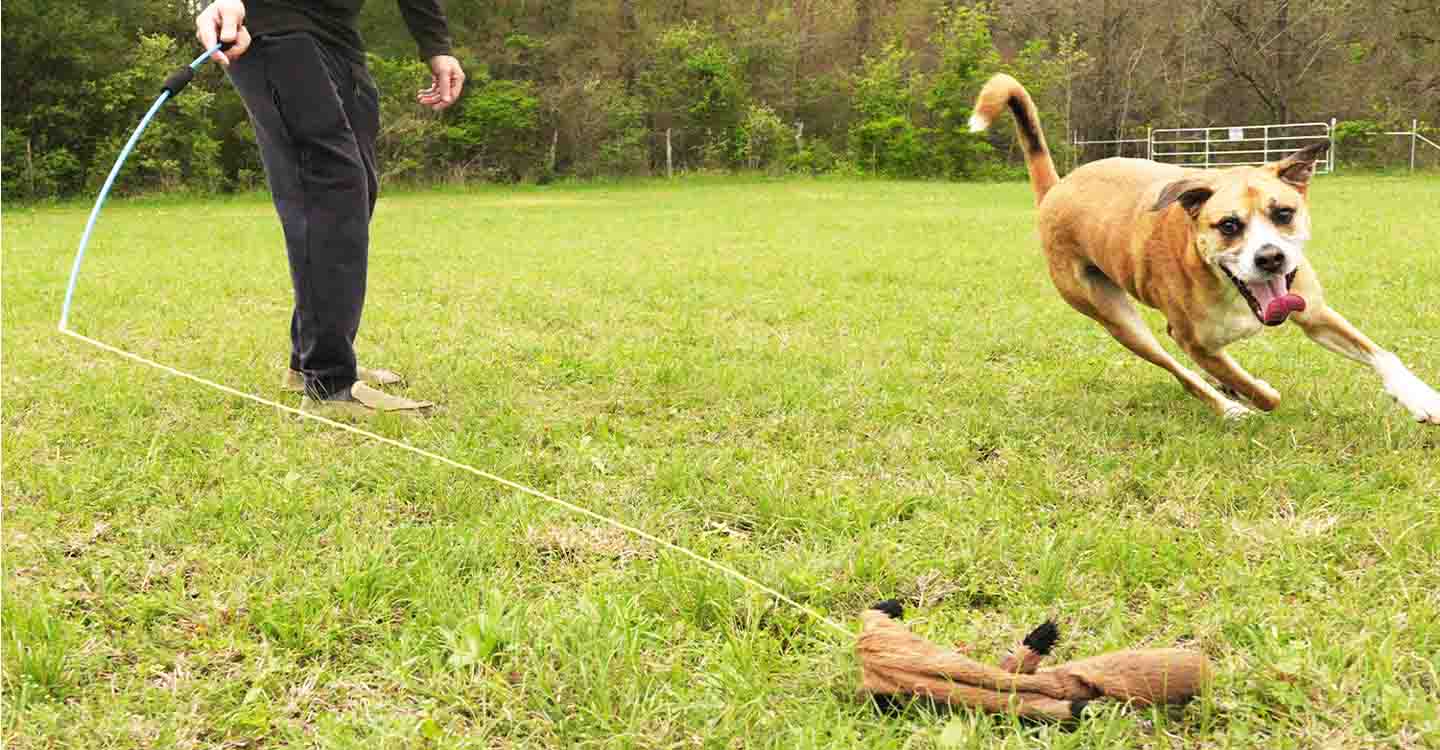
Yes, flirt poles really work, and the response rate is high enough that I bet my career on it. Approximately 90 percent of the 400 client dogs I’ve used flirt poles with showed measurable behavioral improvement within 2 to 3 weeks of consistent use. For high-prey-drive dogs specifically, the response rate is near 100 percent. The 10 percent that don’t respond mostly have an underlying issue that is not exercise-related, where the flirt pole was the wrong tool for the actual problem. The technique matters: dogs need to catch the lure regularly, sessions need to end deliberately, and the work needs to be daily.
For the broader product breakdown, see best flirt pole for dogs.
Who Asks This Question
- Skeptics who think it’s marketing hype or a social media trend
- Owners who have tried walks, fetch, chew toys, dog parks, and day care without success and are considering this as a last resort
- Pre-purchase researchers comparing this to other dog enrichment tools
- Anyone whose dog is “still wired after a walk” who wants to know if a different tool will actually help
- Owners who want quantification, not vague promises, before spending $55 to $95
The Numbers That Actually Matter
Most “do flirt poles work” content on the internet either says “yes definitely!” with no quantification, or hedges with “it depends” and tells you nothing useful. Specifically, here is the actual breakdown from my client work.
The honest framing: the flirt pole is the most effective single tool I’ve used for a specific category of dog (high-drive, under-exercised, reactive, or impulse-control-deficient). It is not a universal solution. However, it does not fix separation anxiety. In contrast, medical pain causing reactivity is a separate issue entirely. Likewise, it does not fix fear-based aggression. For the problems it does address, the response rate is high enough that I recommend it to clients before any other intervention.
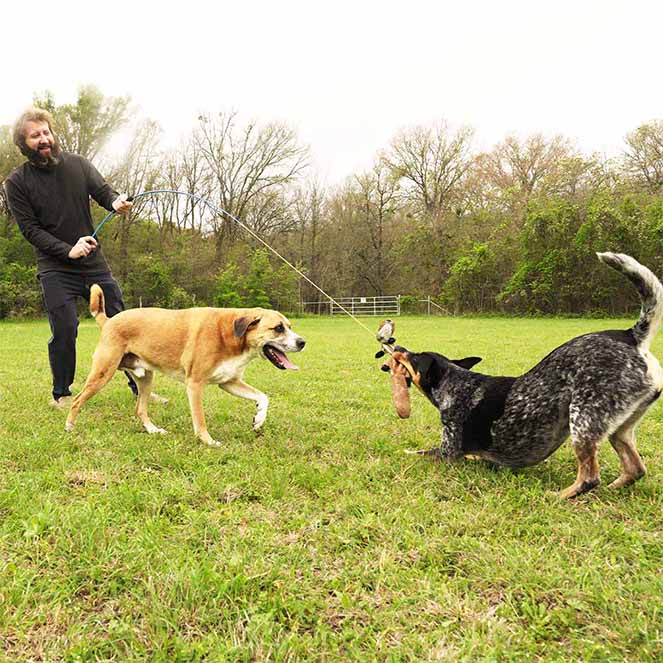
In fact, the reason it works is not marketing. Instead, it is the hardwired neurological sequence dogs evolved over thousands of generations to complete: stalk, chase, capture, win. However, walks do not complete it. Likewise, fetch does not complete it (the human throws, not the prey moving naturally). In contrast, the flirt pole does complete it. When the sequence closes, dopamine and serotonin release, and the dog achieves the neurological satisfaction that other exercises do not produce. For the broader category comparison and where this tool sits in the 2026 landscape, see the best flirt pole for dogs in 2026.
The 4 Markers of a Flirt Pole That’s Working
If you want to know whether your flirt pole sessions are actually producing results, look for these four specific markers across two timescales. If you are seeing all four, the tool is working. Seeing none of them? Check your technique against section 05 before assuming the tool failed.
Immediate Markers (After the First Session)
1. First, physical tiredness without collapse. The dog is panting normally, lying down within 5 to 15 minutes of session end, and stays settled. Not exhausted past their capacity, not hyped up and pacing. Just tired in the way a dog should look after appropriate exercise.
2. Mental shift from arousal to calm. Watch the dog’s eyes. Before the session: hard, focused, scanning. After a successful session: soft, relaxed, looking at you for direction rather than scanning for movement. This is the dopamine and serotonin shift you can see externally.
Cumulative Markers (After 2 to 3 Weeks of Consistent Sessions)
3. Reduced reactivity on walks. Dogs who were lunging at squirrels, other dogs, or cyclists will show measurable reduction in reactivity. Not perfection. Just less. If walks were a 9 out of 10 chaos level before, they should be a 5 or 6 after 3 weeks.
4. Easier evening settling and reduced destruction. Dogs who paced, chewed furniture, or refused to settle at night will start sleeping deeply through the evening. This is the most owner-reported benefit because it directly improves the owner’s quality of life. Per AKC guidance on calming a hyper dog, this is exactly the pattern you should see when an exercise intervention is correctly matched to the dog’s needs.
If you are seeing markers 1 and 2 after every session but not 3 and 4 after 3 weeks, the issue is usually frequency. Daily sessions produce cumulative results. 3 sessions a week does not. Make it daily.
4 Real Client Dogs, What Actually Happened
Composite case studies from client work, anonymized but representative of the patterns I see consistently. Names changed, breed and behavioral details preserved.
Bear, 3yo Belgian Malinois
- Reactive to every dog within 50 feet on walks
- Counter-surfing daily, ate two phones
- Owner doing 2-hour walks, dog still wired
- Owner considering rehoming
- Reactivity dropped to ~30% of baseline
- Zero counter-surfing incidents
- Walks reduced to 45 minutes total
- Owner kept the dog. Wedding paid for instead
Penny, 2yo Lab Mix
- Destroyed 4 couch cushions in 3 months
- Chewed baseboards when left alone for under an hour
- Tried Kongs, snuffle mats, frozen treats, all failed
- Owner working from home, dog never settled
- Zero destruction incidents
- Slept under desk for 4-5 hours during workday
- Started bringing toys to owner for play instead of destroying them
- Owner: “I have my house back”
Loki, 4yo Siberian Husky
- 90-minute morning walks did nothing
- Escaped backyard 4 times in 6 weeks
- Vocalized continuously when alone
- Pulled owner off bike
- 12 minutes flirt pole replaced 90 minutes of walking
- No escape attempts since week 2
- Vocalization reduced ~70%
- Walks recreational, not exercise-essential
Daisy, 5yo Cavalier King Charles
- Destructive when left alone
- Pacing, panting, drooling on departures
- Vet ruled out medical causes
- Owner assumed it was “not enough exercise”
- Daisy enjoyed flirt pole sessions
- Behavior unchanged when alone
- Diagnosis: separation anxiety, not under-exercise
- Referred to veterinary behaviorist, separate intervention
Daisy is the 10 percent case. The flirt pole did not fix her behavior because her behavior was not caused by undischarged exercise needs. It was caused by separation anxiety, which is a completely different neurological condition. The flirt pole was the wrong tool. The honest thing is to recognize when that’s true and refer to the right intervention, not to oversell what the tool can do.
“A client’s 4-year-old working-line Malinois went from destroying the house and failing every outdoor command to full off-leash recall in public within 14 days. Same dog. Same owner. Different tool and different structure.”
Christopher Lee Moran · Working Dog TrainerWhich Dogs Respond Best, and Which Don’t
In short, here is the honest population breakdown. If your dog is in the left column, expect near-universal positive response. If your dog is in the right column, the flirt pole is probably not the right primary intervention. Mixed-breed dogs typically follow whichever parent breed dominates their behavior.
~95-100% Response Rate
- High-prey-drive breeds: Huskies, Border Collies, Australian Shepherds, German Shepherds, Belgian Malinois, Cattle Dogs
- Terriers: Pit Bulls, Staffies, Bull Terriers, Jack Russells, Bull Terriers, mixed working terriers
- Sighthounds: Whippets, Greyhounds, Salukis, Borzois
- Sporting breeds: Vizslas, Weimaraners, Pointers, Setters
- Mixed breeds with any of the above in their lineage
- Reactive dogs where the underlying issue is undischarged drive
Wrong Tool for the Problem
- Low-drive dogs who show no chase interest (some Bulldogs, Pugs, Basset Hounds)
- Senior dogs with no remaining drive or active joint issues
- Puppies under 6 months (growth plates not closed, developmental restriction)
- Dogs with separation anxiety where the issue is not exercise-related
- Dogs in medical pain causing reactivity (rule out medical first)
- Fear-based aggression requires different intervention entirely
For the welfare and ethics question that often comes up next, see are flirt poles cruel, and for the injury-and-joint safety angle separate from welfare, see is a flirt pole safe for dogs.
3 Reasons Owners Think It’s Not Working
If you bought a flirt pole and your dog seems to enjoy it but you are not seeing the behavioral improvements above, the issue is almost always one of these three. Fix the technique and the results follow.
Reason 1: The Dog Is Not Catching the Lure
In practice, this is the single most common reason. For example, owners watch flirt pole videos online where the lure stays just out of reach for the entire session. That’s TikTok content, not training. The dog needs to catch the lure every 30 to 45 seconds. The capture is what closes the predatory sequence and produces the dopamine and serotonin shift. A dog chasing without catching is a dog in sustained frustration, which is the opposite of what you want.
Reason 2: The Sessions Are Not Frequent Enough
Specifically, one session a week does not produce behavioral change. In contrast, three sessions a week is borderline. Finally, daily sessions produce the 2-to-3-week behavioral improvement pattern. The cumulative effect is what matters. If you are running sessions every few days and complaining the flirt pole “doesn’t work,” it is working, you are just not running it often enough to see the cumulative result.
Reason 3: The Underlying Issue Is Not Exercise-Related
Like Daisy in the case study above. If your dog’s behavior is driven by separation anxiety, medical pain, fear-based aggression, or another non-exercise issue, the flirt pole was never going to fix it. The flirt pole addresses undischarged prey drive. If that’s not the underlying cause of the behavior, the flirt pole is the wrong tool. A veterinary behaviorist consultation is the next step for these dogs. Per AVMA guidance on canine behavior, ruling out medical causes is the appropriate first step before behavioral intervention.
The Realistic Timeline of Results
If you do everything right (technique correct, sessions daily, correct dog population), here is the realistic timeline:
Day One Session Fatigue
10 to 12 minutes of structured chase. The dog is panting, lying down, and visibly tired within 15 minutes of session end. Immediate, visible.
Early Pattern Forming
Dog starts anticipating the session, sitting at the door at the usual time. Some dogs sleep harder at night even in the first week. Reactivity unchanged at this stage.
Behavioral Shift Begins
Observable reductions in reactivity, destruction, and restlessness start appearing here. Owner reports easier walks. Settling improves measurably at night.
Compound Results
The full 4-marker pattern appears. Owner usually says “I have my dog back” around this point. Some dogs reduce destructive behaviors by 70 to 90% from baseline.
New Baseline
The improvements stabilize as the dog’s new baseline. The flirt pole becomes part of the daily routine, not a behavioral fix. Quality of life for both dog and owner is meaningfully different from where it started.


