
The short version
In practice, flirt poles are safe for most healthy adult dogs when used correctly. Injuries almost always trace back to one of five mistakes: lure flying overhead (joint stress from jumping), sessions over 10 minutes (soft tissue strain), wrong-sized gear, no deliberate ending, or use on hard surfaces. Each is preventable with structured technique. The dogs that should not run high-intensity sessions: puppies before growth plates close, dogs with joint issues, and seniors with arthritis or heart issues. Everyone else, including reactive and high-drive dogs, runs safe structured sessions when proper technique is followed. For the underlying drive theory, see predatory motor pattern explained.
Who This Safety Guide Is For
- Owners researching whether flirt poles are safe before buying
- Owners of reactive, anxious, or high-arousal dogs worried about flare-ups
- Anyone with a senior dog or a dog with orthopedic concerns
- Dogs already using a flirt pole, and handlers unsure if technique is right
- Trainers vetting flirt poles for client recommendations
Signs Your Dog Needs Structured Flirt Pole Work
- Destroys toys within minutes, drive has nowhere to go
- Leash reactive to dogs, bikes, or squirrels, pent-up prey drive lowering trigger threshold
- Zoomies after dinner every night, accumulated arousal seeking an outlet
- Pulls hard on every walk, speed and chase needs unmet
- Barks nonstop at the fence line, predatory motor pattern stuck at stalk phase
- Still bouncing off the walls after a 45-minute walk, aerobic exercise alone is not resolving drive load
Are Flirt Poles Actually Safe?
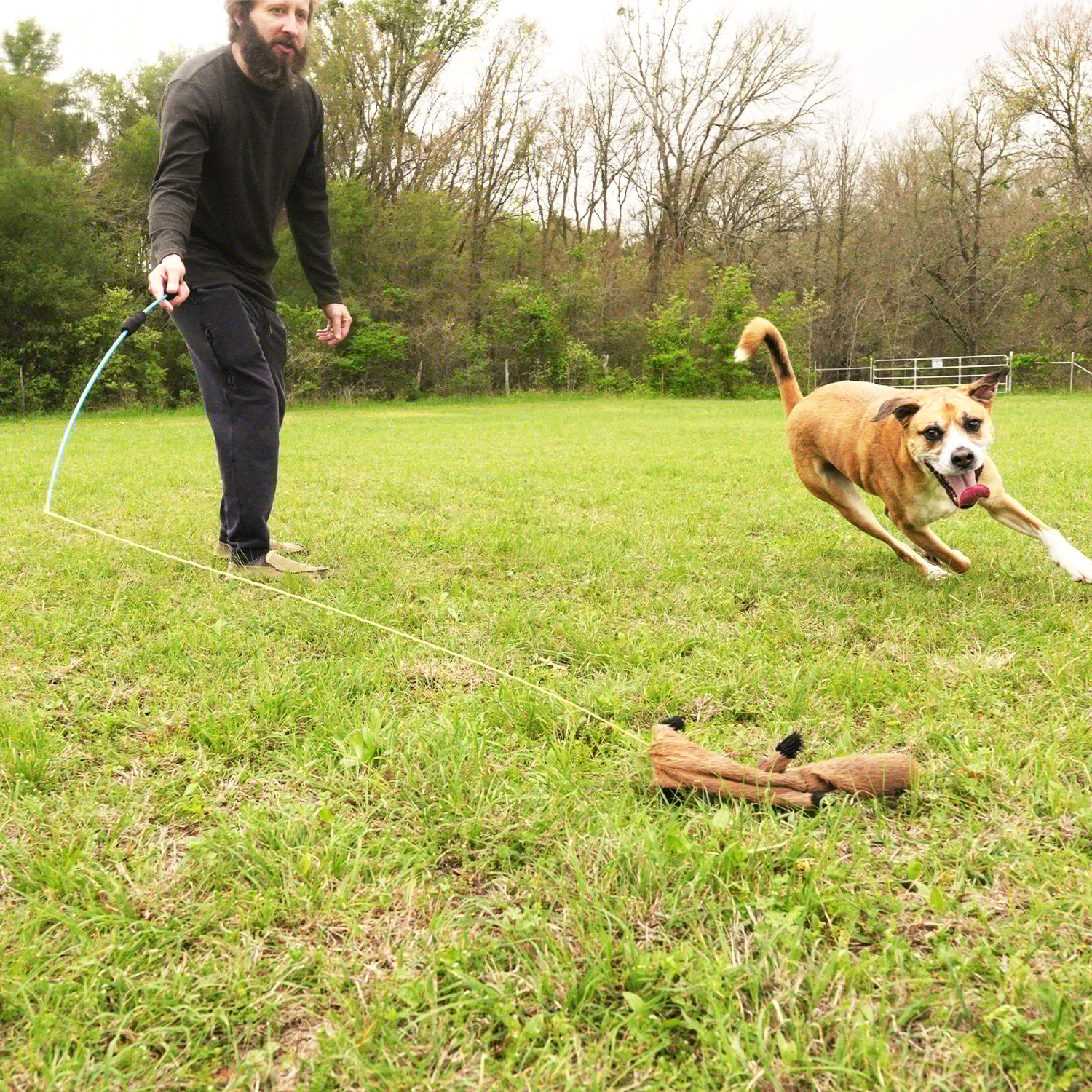
Yes for most dogs, with caveats that matter. A flirt pole used with proper technique on appropriate surfaces with the right gear is one of the lowest-injury exercise tools available for high-drive dogs. Used incorrectly with bad gear on hard surfaces it can cause real injury. The same is true of every form of dog exercise. Activity choice does not determine safety. Technique does. According to AVMA behavior guidelines, structured chase play meets neural needs passive exercise does not, with injury risk lower than off-leash dog parks or high-volume fetch on hard surfaces.
Lure Stays at Ground Level
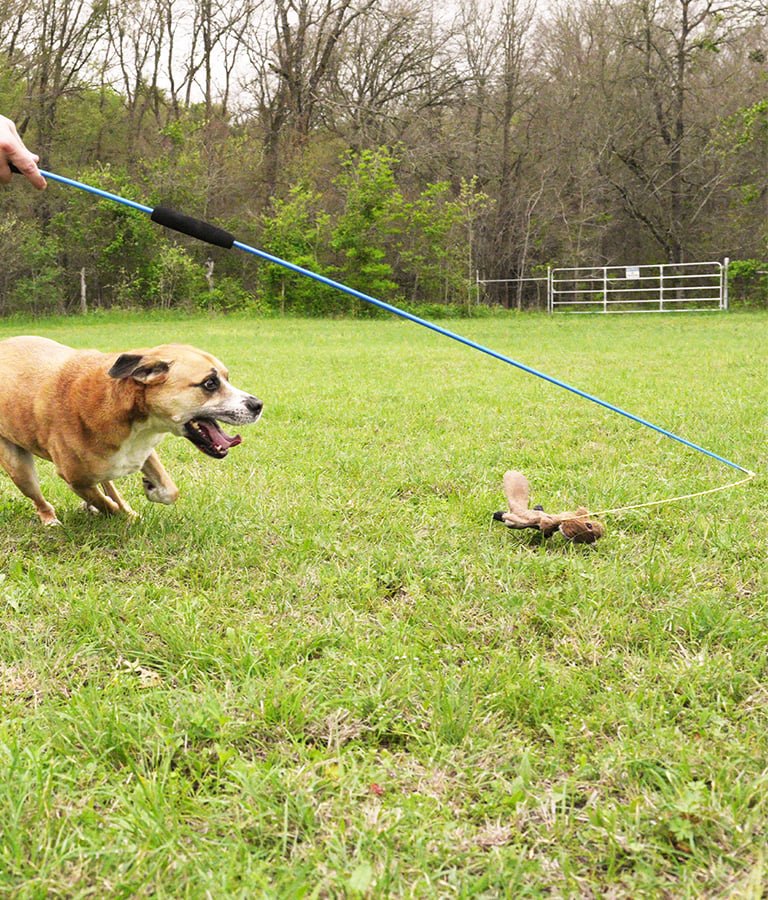
In practice, the lure moves in ground arcs, never overhead. Vertical jumping stresses joints on landing in ways flat sprints do not. Mice and rabbits do not fly. Keep the lure where prey actually moves.
Ground arcs only, no jumpsStructured Rounds With Rest
30 seconds of chase, then a wait. Run 4 to 6 rounds total. Maximum session length: 10 minutes including rest. Dogs will run themselves into heat stress before they self-regulate. Structure does it for them.
30s on, 30s off, 6 rounds maxRight-Sized Gear for the Dog
Dogs 30 lbs and under use the Standard size. Dogs over 30 lbs use the Rugged XL. Wrong-sized gear is a structural safety issue, a pole rated for a 25-lb dog can fail under a 60-lb dog bite force.
Standard or Rugged XL by weightDeliberate Session Ending
In short, verbal all-done cue, lure removed, dog into a down or place with a chew. A session that trails off leaves the drive system loaded and the dog wired. The deliberate end is part of the safety protocol, not an optional courtesy.
All-done cue, lure away, settleAll four rules work together. Skipping one, even the session ending, leaves the drive system loaded. A dog that ends a session still wired is more reactive on the leash an hour later, not less. The protocol is a complete unit.
Particularly, across roughly 400 client dogs over 10 years, I have not had a single injury during a structured flirt pole session that followed these four rules. The injuries I hear about almost universally come from someone letting the lure fly overhead or running ten-minute sessions with no rest. The tool is not dangerous. Technique determines outcome.
Christopher Lee Moran · Founder · 10 years training high-drive dogsWhat Safe Use Looks Like vs What Does Not
In fact, the difference between safe and unsafe flirt pole use is not subtle. Three failure patterns account for the vast majority of injuries reported by owners, and each comes from a violation of the four rules above. The American Kennel Club calls structured chase work one of the best enrichment options for high-drive breeds because it gives a controlled outlet for behaviors that would otherwise surface uncontrolled. That controlled context only works when the four rules are followed.
Joint stress from overhead lure
In short, letting the lure fly overhead so the dog jumps over and over is the top cause of joint injury. Landing forces stress hocks, hips, and shoulders. Ground arcs only, every session.
Soft tissue strain from no rest
For example, dogs run themselves into heat stress and soft tissue strain before they stop. Sessions over 10 minutes with no rest breaks are the next most common injury cause. Watch the dog: wide tongue, slow recovery, lying down without prompting are stop signals.
Impact injury on hard surfaces
Indeed, concrete, tile, hardwood, and pavement send impact forces that grass and dirt absorb. Flirt pole sessions belong outdoors on grass or dirt, never on bare hard floors. For underlying gear context, see why fiberglass wins.
Meanwhile, the misconception is that play involving chasing and biting reinforces aggressive behavior. Ten years of working with reactive, drive-heavy, and resource-guarding dogs has shown me the opposite pattern consistently. Drive that has nowhere to go is what causes the displacement behaviors owners fear.
Christopher Lee Moran · Controlled Freedom Method · my private training practiceThe Variables That Determine Safety
For example, five factors decide whether a flirt pole session is safe or unsafe. Each is binary: get it right and the session is safe, get it wrong and injury becomes a real risk. The table below maps every factor so you can check your own setup against the safety bar.
The catch phase matters. A lure that is permanently out of reach frustrates rather than resolves drive. Allow a catch every 3 to 4 rounds. The predatory sequence needs to complete, stalk, chase, capture, win, or baseline arousal stays elevated after the session ends.
Dogs That Should Not Run High-Intensity Flirt Pole Sessions

However, not every dog is a candidate for the full-intensity protocol. Some need modified sessions, and a few should skip flirt pole work until cleared by a vet. The four categories below are medical, not behavioral. A reactive dog is a great candidate. A dog with hip dysplasia is not. For broader safety context, see are flirt poles cruel.
Diagnosed orthopedic conditions, veterinary clearance required
In fact, hip dysplasia, elbow dysplasia, luxating patella, cruciate injury, or arthritis. The quick turns and sprints stress joints in ways that are not safe for these dogs. Talk to your veterinarian before any flirt pole work. Lower-impact alternatives: straight-line lure courses, scent work, controlled tug.
Vet ClearancePuppies before growth plate closure, modified protocol only
Specifically, small breeds reach skeletal maturity at 8 to 12 months, medium breeds 12 to 16 months, large or giant breeds 18 to 24 months. Before this age, light low-intensity sessions are fine for teaching wait and drop-it cues. However, full-intensity sprinting and direction changes should wait. Check with your veterinarian for breed-specific timelines.
Age GatingSeniors and dogs with cardiovascular issues, veterinary clearance required
A healthy senior with no joint disease can run modified short-duration sessions. A senior with arthritis, heart disease, or breathing issues should skip high-intensity chase work without vet guidance. For these dogs, the goal shifts from drive work to gentle play.
Vet ClearanceDogs recovering from injury or surgery, temporary contraindication
Overall, any dog within 6 to 8 weeks of joint surgery, soft tissue injury, or serious illness should be cleared by their vet before resuming high-intensity exercise. Walking is fine. Sprinting and grab-and-shake play is not. For the authority case on the structured protocol, see why we recommend the Whimsy Stick.
TemporaryWhy Gear Quality Is a Safety Issue
In practice, most of the safety conversation centers on technique, but gear quality matters too. A flirt pole that fails mid-session is a safety hazard. Bungee lines that snap back at the handler are safety hazards. Telescoping poles that shear at the joint are safety hazards. The gear specs that determine durability are the same specs that determine safety. Pick the right size for the dog, every time.
Specifically, structured rounds with rest, balanced field of chase, replaceable reinforced lures. Engineered for safe structured sessions with small and medium dogs.
800-lb Dyneema static line, one-piece reinforced fiberglass pole. $74.95 (1 lure) or $94.95 (3-lure bundle). Free US shipping included.
The Safe Session Protocol, Step by Step
This is the exact protocol used across 10 years of structured drive work. It covers warm-up through settlement. Run it in this order every time. Skipping steps is where sessions go wrong.
Do Not Start Without Reading This
Never run a flirt pole session on concrete, tile, or hardwood. Hard surfaces transmit impact forces that grass and dirt absorb. One bad cut on a slick floor can produce a soft tissue injury that sidelines a dog for weeks. Outdoors on grass is the only approved surface for full-intensity sessions.
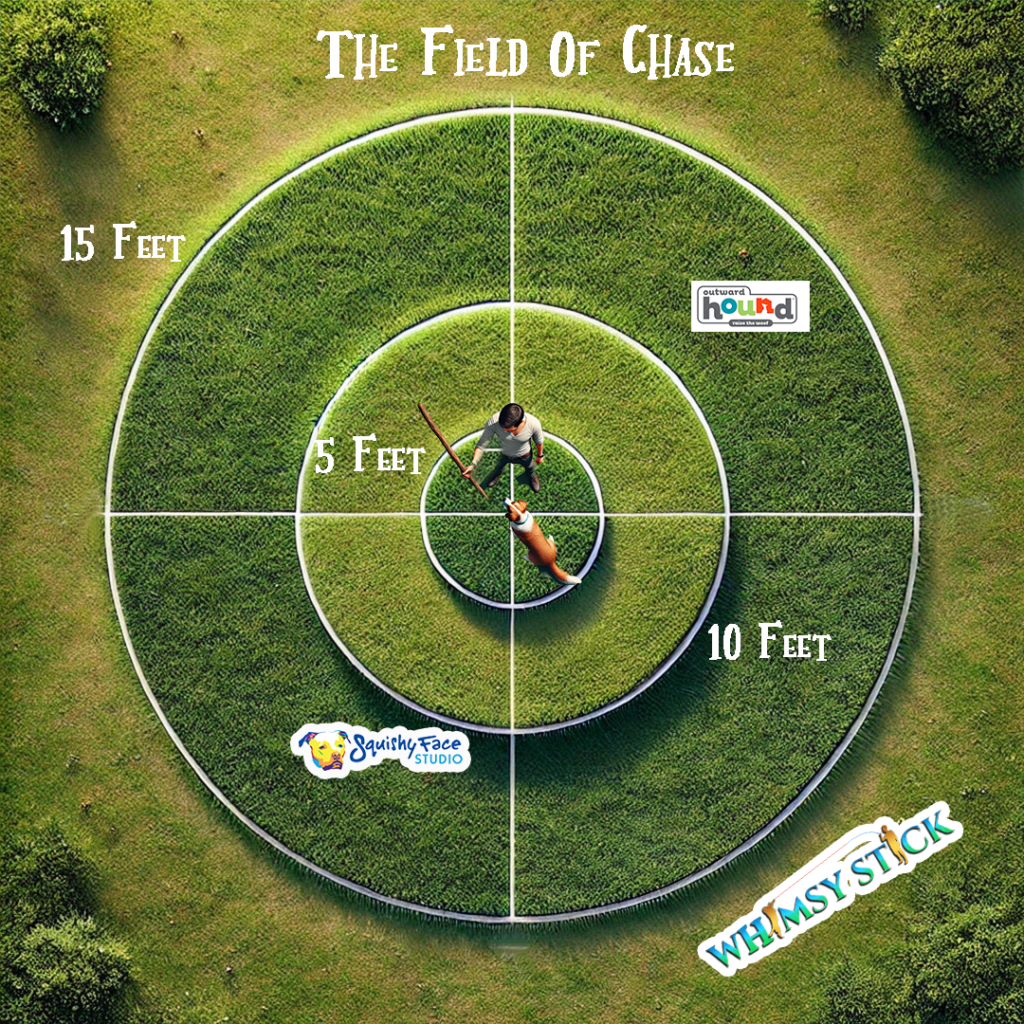
In short, confirm grass or dirt surface. Minimum 15 feet of clear radius. Remove any obstacles in the swing arc. Check lure attachment is secure before the first drag.
Pre-sessionDog holds a wait or sit before each round begins. This is not optional. The impulse control rep at the start of each round is half the training value of the session.
Wait cueIn fact, ground arcs only, sweeps, figure-eights, direction changes. No overhead lure. No vertical jumps. Keep the lure moving like prey actually moves: low, fast, unpredictable.
Chase phaseCatch, rest, and the deliberate close
In practice, let the dog catch and shake the lure. Hold still. Let the predatory sequence complete: stalk, chase, capture, win. Then ask for a drop-it before the next round begins.
Drop-it cueFor example, dog into a sit or down. Handler holds the pole still. Watch for wide tongue, slow recovery, or lying down without prompt, these are stop signals. Do not run more than 6 rounds total.
Rest phaseParticularly, verbal all-done cue. Lure removed from sight. Dog directed to a place, mat, or chew. A session that trails off leaves drive loaded. The deliberate end is not a courtesy, it is part of the safety protocol.
All-done cueThe wait cue before each round is the most underused part of this protocol. Most owners skip it and go straight to chase. That rep, hold the drive, get the cue, release, is what transfers to leash manners, threshold work, and door behavior. Do not skip it.
4-Year-Old Malinois, 847 Sessions, Zero Structured-Protocol Injuries
A 4-year-old Belgian Malinois, a breed with some of the highest drive load and injury risk of any working dog, ran the structured protocol described above 5 days per week for 3 years. Every session logged. Every session on grass. Lure at ground level every round. Wait cue before every round. Deliberate all-done ending every session.
Meanwhile, zero injuries across 847 protocol-compliant sessions. The two sessions that did produce minor soft tissue soreness in year one were both from before the full protocol was in place, before the rest-round structure was tightened. Both resolved within 48 hours. Neither recurred after the protocol was locked.
This pattern holds across roughly 400 client dogs over 10 years. Injuries in structured sessions following all four rules: zero. Injuries in sessions where at least one rule was broken: multiple. The data is not subtle.
Flirt Pole Use for Senior Dogs and Post-Op Recovery
In short, most flirt pole content assumes a healthy adult working-breed dog with no joint issues, no surgical history, and full musculoskeletal integrity. That covers maybe 60% of real client dogs. The rest are 8+ year-olds, post-orthopedic-surgery, post-cruciate-repair, three-legged, or otherwise modified from the standard template. Yet the tool still works for these dogs. Specifically, the protocol does not. Here is what changes.
Senior dogs (8+ years)
However, drive does not go away with age. Joint structure does. A 10-year-old Border Collie still wants the eye-stalk-chase loop. Her hips will not tolerate the sprinting cuts a 3-year-old can absorb. The modification is intensity, not engagement. Drop session length to 5 to 7 minutes. Drop intensity from 80-90% to 50-60%. Keep the lure moving at ground level but in wider, slower arcs, no hard cuts, no spin-and-chase. Let the dog catch and possess sooner and more often. Skip warm-up sprints entirely. Two short low-intensity sessions per day beat one normal session for an arthritic senior.
Post-surgery modifications
This is veterinary territory, not trainer territory. The numbers below are my conservative defaults across what specialty surgeons and rehab vets have told me over 10 years, but your vet’s clearance trumps everything here.
Soft tissue surgery (mass removal, abdominal, dental): 6 to 8 weeks before any chase work. No sprinting, no jumping, no twisting until incision sites are fully healed and the dog has clearance.
Orthopedic surgery (TPLO, FHO, fracture repair, IVDD): 12 to 16 weeks minimum, and only when your vet or rehab specialist signs off. Even after clearance, drop intensity by half indefinitely. A post-TPLO dog has a different joint than they used to and should not be running cuts at full speed ever again. Slow lure drags, mat-based engagement, and wait-and-release impulse work give them the cognitive component of the protocol without the impact.
Three-legged dogs
Indeed, tripods compensate by loading the remaining limbs harder. That means hard cuts, sharp pivots, and full-speed sprinting concentrate forces in ways the dog’s body cannot fully absorb long term. Keep the lure on straight or gentle-curve paths only. No spin-and-chase. No catch-and-shake. Allow capture early, hold briefly, then end the round. Sessions cap at 4 to 5 minutes. Three short rounds across the day beat one normal session.
The drive-without-impact pattern
For any of the above dogs, the goal is to engage the predatory motor pattern without joint impact. In practice, the structure I use is this: ultra-slow lure drags (the dog stalks more than chases), wait cues at every transition, mat-based settling between rounds, and frequent low-stakes captures. Ultimately, the dog gets the cognitive and emotional benefit of the sequence, eye, stalk, chase, capture, win, with a fraction of the mechanical load. Most senior and post-op dogs respond extremely well to this. They were not asking for the sprint. They were asking for the predatory loop.


